
MGM-15 for U.S. Labs: Research-Grade Sourcing Guide
- 7OHyea
- 1 hour ago
- 8 min read


MGM-15, formally known as dihydro-7-hydroxymitragynine (DH-7OH-MIT), is a semi-synthetic opioid analogue of 7-hydroxymitragynine, that U.S. laboratories should source only from a compliant supplier providing a full Certificate of Analysis (COA), Safety Data Sheet (SDS), and documented batch traceability. Given the DEA’s July 2026 notice of intent to temporarily schedule this compound under Schedule I, procurement decisions made now carry significant compliance weight. Before any sample enters your facility, confirm these three documents are in hand:
COA with batch number, assay method, purity percentage, and analyst signature
SDS/MSDS covering hazard classification, exposure controls, and disposal
Chain-of-custody record linking the specific lot to your purchase order
Table of Contents
What is MGM-15 chemically, and how does it compare to related alkaloids?
MGM-15 is the 1,2-dihydro derivative of 7-hydroxymitragynine, preserving the indoloquinolizine core of the parent molecule while gaining slightly higher receptor affinity. Its recognized synonyms include dihydro-7-hydroxymitragynine, DH-7OH-MIT, and the consumer shorthand “DHM.” That last abbreviation is a persistent problem for analytical teams: “DHM” is ambiguous in the market and has been applied to proprietary blends containing MGM-15 plus mitragynine, making COA verification against the full chemical name and molecular formula non-negotiable.
At recombinant human receptors, MGM-15 shows ≈28 nM affinity for hMOR and ≈59 nM for hDOR, functioning as a full μ/δ dual agonist. Those values exceed 7-hydroxymitragynine in the same assays, which matters when designing cross-reactivity experiments or setting calibration ranges.
Key identity and potency points for procurement and assay planning:
vs. 7-OH: MGM-15 shows higher μ/δ affinity and greater antinociceptive potency in rodent models while retaining oral activity
vs. MGM-16: MGM-16 carries a 9-fluoro substituent and is synthetically more complex, with Ki values of ≈2.1 nM (hMOR) and ≈7.0 nM (hDOR) — substantially more potent; MGM-15 is the non-fluorinated, more scalable analogue
Market form: high-purity powder at ≈97–99% is the dominant research format; unit-dose tablets around 12 mg have also been observed
What is the U.S. regulatory status of MGM-15 in 2026?
The answer is direct: MGM-15 is currently the subject of a DEA notice of intent to place it under Schedule I on a temporary basis. The Federal Register entry of July 6, 2026 covers mitragynine pseudoindoxyl, MGM-15, and MGM-16 together. If the temporary order is finalized, it imposes Schedule I controls — including manufacturing, distribution, import, export, research, and possession restrictions — on all handlers.
The regulatory logic distinguishes botanical kratom leaf (below defined alkaloid thresholds) from concentrated and semi-synthetic derivatives. MGM-15 falls squarely in the latter category. HHS pharmacovigilance data and DEA forensic case files both informed this posture, with 86 cumulative adverse events and 85 forensic cases (55 fatal) linked to concentrated 7-OH products driving the 2026 action.
Compliance note for purchasing teams: The temporary scheduling notice triggers immediate legal review obligations. Any laboratory intending to work with MGM-15 after a final order is published must hold a DEA Schedule I researcher registration. Consult institutional counsel before placing any order once a final rule is in effect.
Pre-order compliance checklist:
Confirm current scheduling status with DEA and your institution’s regulatory affairs office
Obtain a written legal compliance statement from your supplier covering U.S. shipping
Secure institutional approval and, if applicable, an import permit
Document the research justification and intended use in your purchase file
Retain all supplier documentation (COA, SDS, compliance statement) for the duration of the project
This article is general information, not legal advice. Verify current regulatory status with DEA or qualified counsel before ordering.
What lab-grade specifications should you require from an MGM-15 supplier?
Accept only labeled, research-grade MGM-15 with an explicit molecular identity statement and a named assay method on the COA. Proprietary blends, unlabeled powders, or COAs that list only “7-OH analogue” without a chemical name are insufficient for any defensible analytical workflow.
Minimum specification checklist:
Full IUPAC chemical name and CAS number (if registered)
Assay purity percentage with method stated (HPLC or qNMR preferred)
Batch/lot number and manufacturing date
Expiry or stability data with recommended storage conditions
Impurities profile, water content, and residual solvents
COA fields to verify on receipt:
Chromatogram or spectrum attached (not just a summary table)
Analyst initials and laboratory name
Lot traceability linking raw material to finished product
Parameter | Typical market range | Notes |
Purity (powder) | 97–99% | HPLC or qNMR; request method detail |
Package size | multi-gram | Confirm lot number per package |
Unit-dose tablet mass | ~12 mg active | Verify against COA tablet assay |
hMOR affinity (Ki) | ≈28 nM | From recombinant human receptor assays |
hDOR affinity (Ki) | ≈59 nM | From recombinant human receptor assays |
Site taxonomy on vendor platforms sometimes places MGM-15 under 7-hydroxymitragynine categories, so always cross-check the CAS number and molecular formula independently rather than relying on product page classification.

Which analytical methods work best for detecting and quantifying MGM-15?
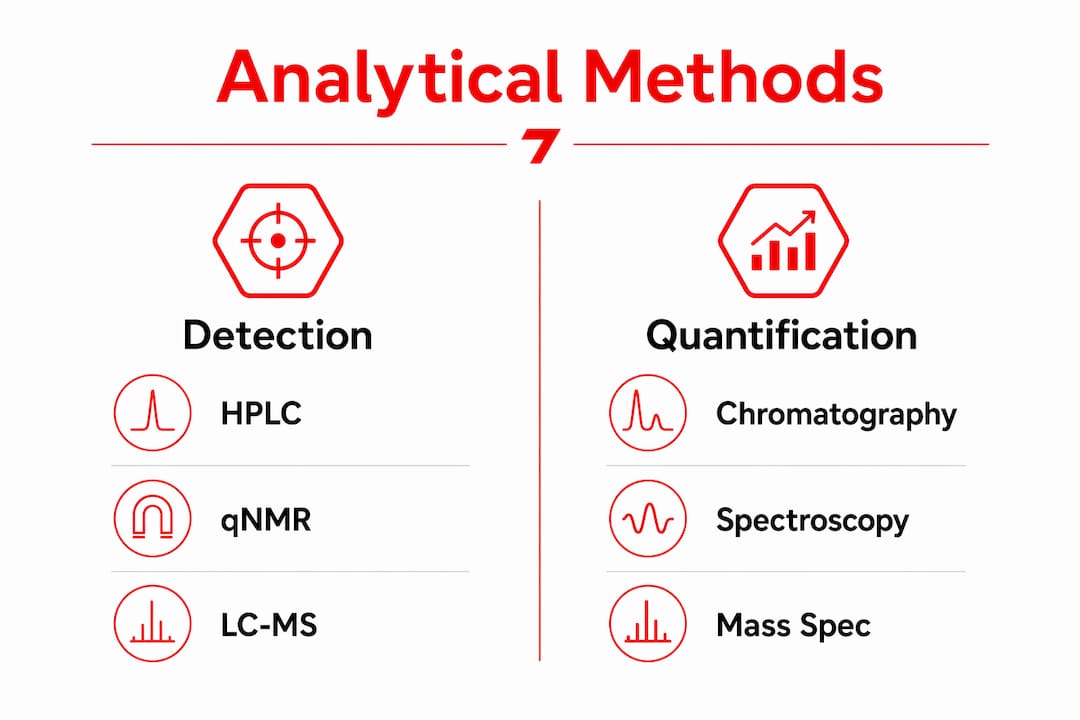
LC-MS/MS is the preferred routine quantification method for MGM-15 in biological and forensic matrices, with LC-HRMS (high-resolution mass spectrometry) used for structural confirmation. qNMR serves as the primary purity assay for reference standard characterization. This three-tier approach — quant, confirm, certify — covers the full analytical workflow most forensic and research labs require.
Method-level guidance for your detection workflow:
LC-MS/MS: use reversed-phase C18 chromatography with acidified mobile phases (0.1% formic acid); positive electrospray ionization; monitor characteristic MRM transitions for the [M+H]⁺ precursor
LC-HRMS: confirm molecular formula and distinguish MGM-15 from isomers or co-eluting analogues; essential when sample provenance is unknown
qNMR: request a qNMR-certified purity value from your supplier for primary calibration; this eliminates reliance on UV response factors that can shift with purity grade
Reference standard: always request an authenticated MGM-15 reference standard with its own COA; do not use a consumer-market sample as a calibrant
Pro Tip: MGM-15 is susceptible to isomerization and interconversion during extraction and chromatography. Control sample pH (acidic conditions suppress conversion), minimize heat exposure, and analyze extracts promptly. If storage before analysis is unavoidable, use stabilizing solvents such as acidified acetonitrile and keep samples at 4°C or below.
How do you order, ship, and receive MGM-15 at a U.S. lab?
The single most important pre-order action is confirming the supplier’s legal shipping policy for U.S. laboratories in writing, including any state-level exclusions and the supplier’s compliance statement covering the current regulatory environment.
Ordering process (numbered steps):
Obtain institutional approval and document the research justification
Confirm supplier’s U.S. shipping eligibility and request a written legal compliance statement
Submit a formal purchase order specifying chemical name, CAS, lot number, quantity, and purity grade
Check applicable HS codes for import classification and confirm no import permit is required under current scheduling status
Arrange courier shipment with a restricted-item declaration; request temperature-controlled packaging if your transit time exceeds 48 hours
On-receipt checklist:
Inspect outer packaging for damage and confirm tamper-evident seals are intact
Match the lot number on the label to the COA provided at purchase
Perform an identity screen (LC-MS or LC-MS/MS) before releasing the material to inventory
Record chain-of-custody: date received, condition, who accepted, and storage location assigned
Retain all documentation — purchase order, COA, SDS, shipping paperwork, and import records — for a minimum of five years or the duration required by your institutional policy, whichever is longer.
What does 7ohyea offer U.S. research labs sourcing MGM-15?
7ohyea (7OH Canada) is a research-grade supplier of MGM-15 and related mitragynine alkaloid reference materials, manufactured in British Columbia and sold under a strict research-use-only policy. For U.S. labs evaluating a compliant supplier, 7ohyea provides the documentation and product formats that institutional QA teams require.
Available product specifications and trust signals:
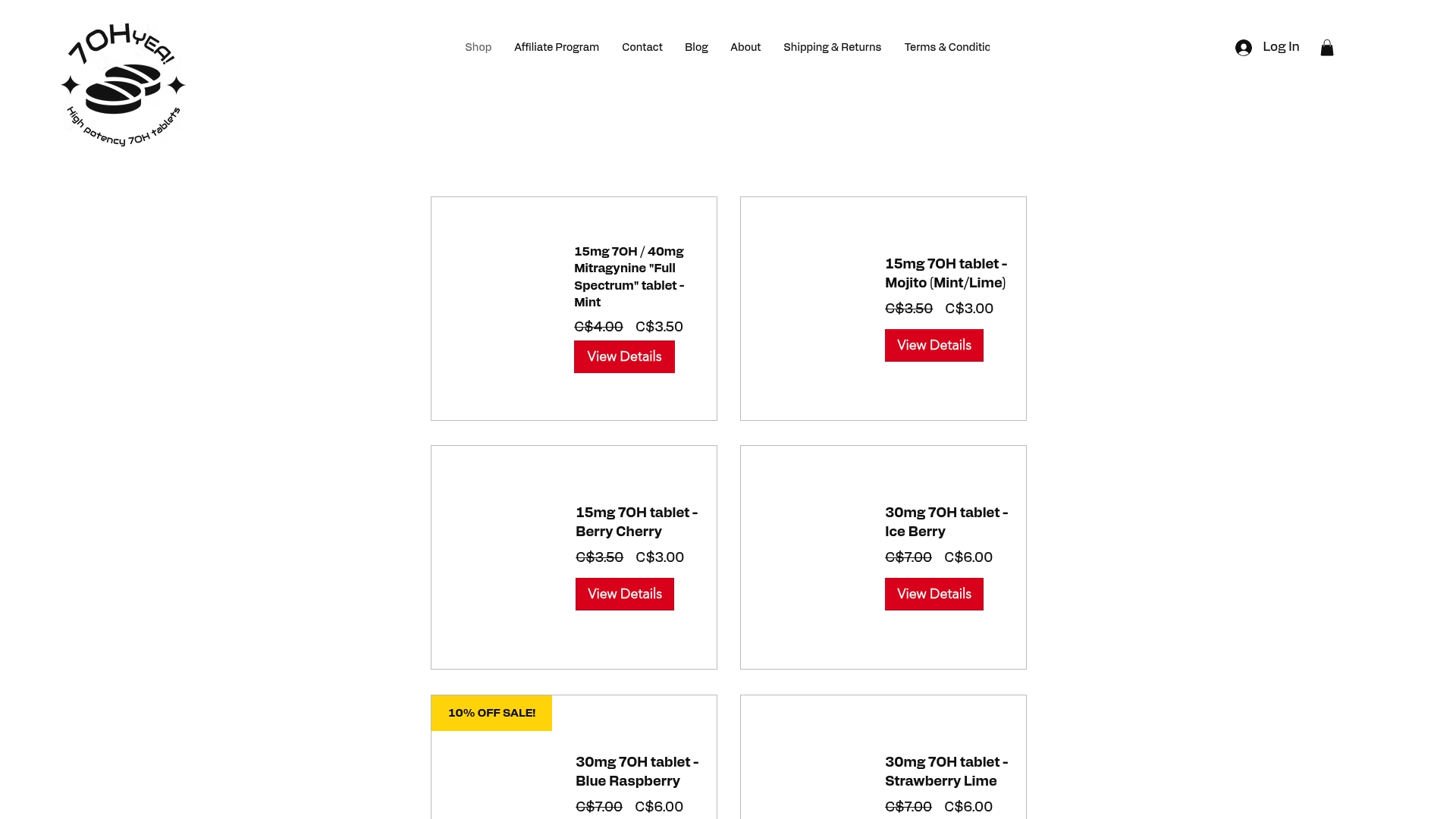
MGM-15 tablets: 30 mg pre-metered tablets for dosing studies and reference comparisons
7-OH powders: purity options at 83% and 93% for labs needing comparative alkaloid matrices
COA availability: batch-specific COAs with lot numbers and assay method notation
Canadian sourcing: manufactured in British Columbia with domestic quality controls
Shipping policy: review current U.S. shipping eligibility directly with 7ohyea given evolving regulatory status
Supplier vetting steps specific to 7ohyea:
Locate the COA and SDS on the product page before ordering; contact support to request qNMR data or third-party testing reports for critical assays
Request chain-of-custody documentation for institutional purchasing files
Confirm batch traceability by cross-referencing the lot number on the COA with the shipped label
Use the institutional purchasing channel for bulk orders or invoicing requirements
How should labs handle, store, and dispose of MGM-15 safely?
Treat MGM-15 as a potent opioid-class research chemical. BSL-2-style administrative controls and PPE appropriate for hazardous opioids apply from the moment the package is opened.
Safety and QC checklist:
PPE: nitrile gloves (double-glove for weighing), lab coat, safety glasses; N95 or half-face respirator when handling powder
Engineering controls: conduct all weighing and dissolution in a chemical fume hood; use closed-system transfer where possible
Exposure response: post SDS at the workstation; naloxone should be accessible in any lab routinely handling opioid-class reference materials
Incoming QC: perform identity confirmation (LC-MS screen) and purity check on each new lot before use; retain a reference aliquot from each batch
Stability monitoring: re-assay retained samples at defined intervals; document any purity drift
Storage: store at 2–8°C in a sealed, light-protected container; log access in a controlled-substance inventory register
Disposal: dispose of waste solutions and contaminated materials through your institution’s licensed chemical waste contractor; do not drain opioid-class compounds to sewer
Interconversion and instability are documented analytical pitfalls for MGM-15, so stability monitoring is not optional — it directly affects the validity of quantitative results.
Key Takeaways
MGM-15 (dihydro-7-hydroxymitragynine) is a Schedule I candidate as of July 2026, and U.S. labs must secure COA, SDS, and institutional approval before ordering from any compliant supplier.
Point | Details |
Chemical identity | MGM-15 is dihydro-7-hydroxymitragynine (DH-7OH-MIT); verify by CAS and molecular formula, not vendor taxonomy. |
Receptor pharmacology | hMOR ≈28 nM, hDOR ≈59 nM; full μ/δ dual agonist with classical opioid liabilities. |
Regulatory status | DEA filed a notice of intent (July 6, 2026) to temporarily place MGM-15 under Schedule I; confirm current status before ordering. |
Required documentation | COA (with assay method and lot number), SDS, chain-of-custody record, and supplier legal compliance statement are mandatory. |
Recommended supplier | 7ohyea offers research-grade MGM-15 tablets and related alkaloid reference materials with batch-specific COAs and a research-use-only policy. |
A note on quality and compliance from 7ohyea
The regulatory environment surrounding MGM-15 in 2026 is moving quickly, and laboratories deserve a supplier that keeps pace with it. 7ohyea’s commitment to research-grade quality means every product ships with a batch-specific COA, and the team is available to provide SDS documentation, qNMR reports on request, and chain-of-custody paperwork for institutional purchasing files. Bulk orders and formal invoicing for research teams are handled through direct contact with the support team. Every product is designated research-use only, consistent with 7ohyea’s legal compliance posture and the expectations of institutional review boards.
Order research-grade MGM-15 from 7ohyea
U.S. laboratories that need a documented, research-grade MGM-15 reference material with full QA paperwork can start at 7ohyea’s product catalog. The 30 mg MGM-15 tablet is available for labs requiring pre-metered formats, while related 7-OH alkaloid powders support comparative matrix work. Contact the institutional purchasing team to request a full COA, SDS, qNMR report, and chain-of-custody documentation before your order ships. Typical lead times and current U.S. shipping eligibility are confirmed at checkout or through direct inquiry.
Primary references and sources for further review
Labs should maintain copies of the following alongside project files:
Federal Register, July 6, 2026: the authoritative regulatory notice for MGM-15 temporary scheduling; cite this in any institutional compliance memo
CFSRE NPS Discovery Report on MGM-15: forensic detection timeline, mislabeling warnings, and analytical pitfall guidance; use when developing method SOPs
Gour et al. / Tandfonline review: peer-reviewed pharmacology and market audit data; use for receptor affinity values and COA interpretation context
PMC / Matsumoto et al.: original medicinal chemistry paper reporting MGM-15 and MGM-16 synthesis and in vivo pharmacology; primary reference for potency comparisons
DEA/Federal Register notices: monitor the Federal Register for finalization of the temporary scheduling order and any permanent rulemaking that follows
Store supplier COAs, SDS documents, and regulatory notices in a single project folder with version dates noted, so any future audit can reconstruct the compliance picture at the time of purchase.
Recommended
Comments