
Tablet formulation basics for research-grade 7OH labs
- 7OHyea
- Aug 15
- 11 min read

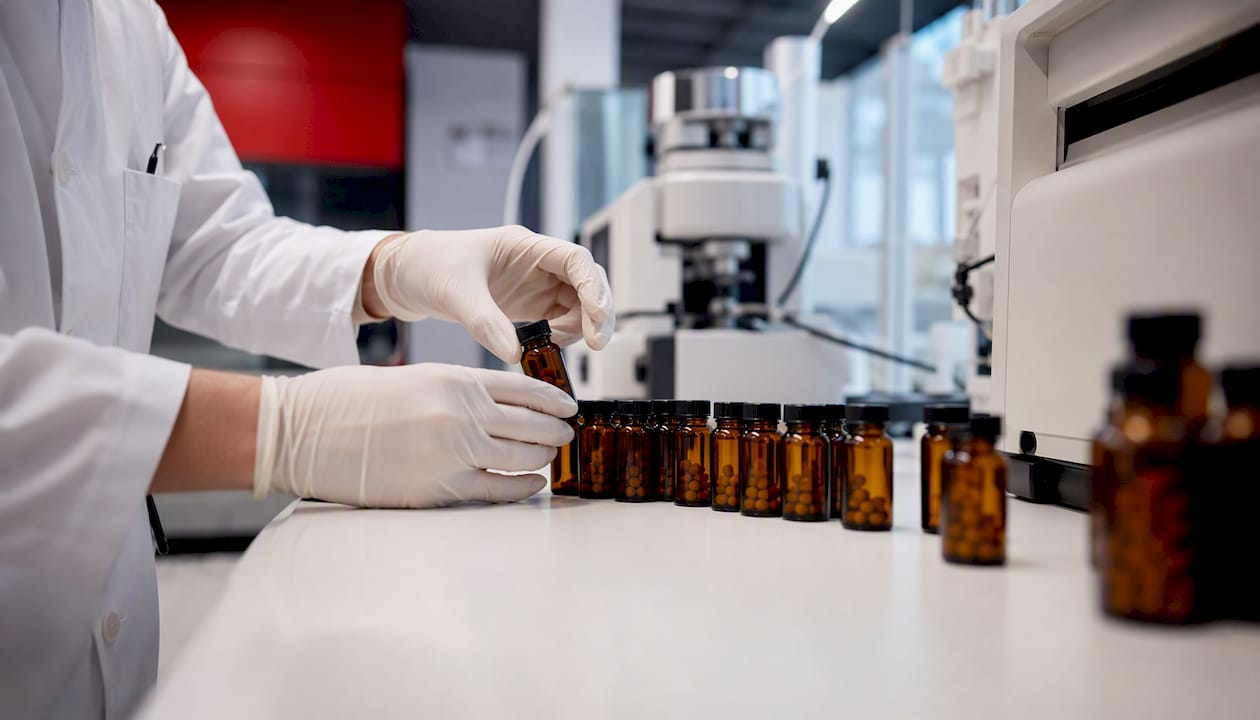
Research-grade 7-hydroxymitragynine (7OH) tablet formulation, in the context of analytical work, means producing or procuring compressed alkaloid preparations that deliver consistent, verified doses of a potent indole alkaloid for use in chromatographic assays, calibration workflows, and stability studies. For most lab workflows, tablets offer a handling and dosing-accuracy advantage over loose powder, particularly at low doses (15 mg, 30 mg, 50 mg), where weighing errors in powder form can introduce significant variability. The verdict: start with a validated tablet form for routine calibration and fingerprinting work, and reserve powder for stock-solution preparation and gravimetric reference tasks. Every batch, regardless of form, must carry documented RSD and RE validation metrics, HPTLC or GC‑MS fingerprinting confirmation, and a full certificate of analysis (COA). 7ohyea supplies research-grade 7OH tablets and powders from British Columbia with batch records and COA documentation included.
Legal and handling callout: These materials are for laboratory research only and are not intended for human consumption. Acquisition and use must comply with your institution’s chemical inventory controls, applicable controlled-substance licensing, and all relevant federal and provincial regulations.
Scope: research-grade 7OH tablets and powders as analytical reference materials only
Key validation metrics: RSD (precision) and RE (accuracy) thresholds for QC acceptance
Instrumental confirmation: HPTLC or GC‑MS fingerprinting required for identity verification
Supplier signal: COA, batch records, and declared assay from a qualified vendor
Pro Tip: Before ordering any 7OH reference material, confirm your institution’s chemical inventory system can accommodate a potent alkaloid entry. Procurement without a registered storage location creates compliance gaps that can halt a study mid-run.
Key takeaways
Research-grade 7OH tablet formulation requires validated QC documentation, controlled storage, and a qualified supplier before any analytical work begins.
Point | Details |
Validate before use | Require RSD ≤15% and RE ±15% on QC samples before accepting any 7OH batch for study use. |
Choose form by workflow | Use tablets for calibration and stability studies; use powder for stock-solution preparation and gravimetric reference tasks. |
Store with desiccant | Seal 7OH materials with silica gel desiccant and monitor hardness and assay at 1, 3, and 6 months. |
Document every step | SOP must include lot numbers, environmental logs, operator initials, and a deviation record for every batch. |
Source from 7ohyea | 7ohyea provides COA-backed, batch-documented 7OH tablets (15 mg, 30 mg, 50 mg) and powder with Canadian domestic shipping. |
Table of Contents
Tablet formulation basics: the lab-scale manufacturing workflow
Producing small research batches of 7OH tablets follows a direct-compression or dry-compression sequence. Pilot-scale work across 15 batches using classical direct-compression methods has demonstrated that tablets meeting pharmacopoeial parameters for weight uniformity, hardness, and disintegration are achievable at lab scale, with friability below the standard 1% limit.
Raw-material receipt and verification — Confirm lot number, declared assay, and COA before any material enters the workflow. Reject any lot without documented identity testing.
Particle sizing — Pass the active and diluent blend through a mesh 20 screen to achieve consistent particle distribution and reduce segregation risk.
Pre-blend mixing — Combine active ingredient with diluent and disintegrant in a V-blender or bin blender; log mixing time and RPM.
Lubricant addition — Add lubricant (typically magnesium stearate) in the final 2–3 minutes of blending only; over-blending degrades tablet hardness and dissolution.
Compression — Set punch and die tooling to target weight and hardness; record compression force, tablet weight, and thickness for every 25-unit interval.
In-process checks — Sample every 50 tablets for weight variation and hardness during the run.
Pilot-batch sign-off — Run a minimum of three pilot batches before committing to a study batch; document deviations and corrective actions for each.
Environmental controls matter as much as the process steps. 7OH is a potent alkaloid at low doses, so any moisture uptake during processing can shift content uniformity and compromise assay recovery.
Pro Tip: For low-dose, potent alkaloids like 7OH, dedicate a single set of tooling and a cleaned, verified blender to each batch. Shared equipment without validated cleaning verification between runs is the most common source of cross-contamination in small-batch alkaloid work.
Use single-use or dedicated glassware for stock solutions
Weigh active ingredient in a closed, ventilated enclosure
Log environmental readings (temperature, RH) at the start and end of each processing step
Excipients for 7OH tablets and compatibility considerations
Excipient selection for a research-grade alkaloid tablet follows the same functional logic as pharmaceutical development, but the priority shifts toward analytical predictability rather than patient palatability.
Functional roles:
Diluents (microcrystalline cellulose, lactose monohydrate): provide bulk and compressibility; lactose should be avoided if the alkaloid is amine-sensitive, as Maillard reactions can form degradation products that interfere with MS detection.
Binders (povidone, HPMC): improve cohesion in wet granulation; for direct compression, pre-gelatinised starch works without solvent exposure.
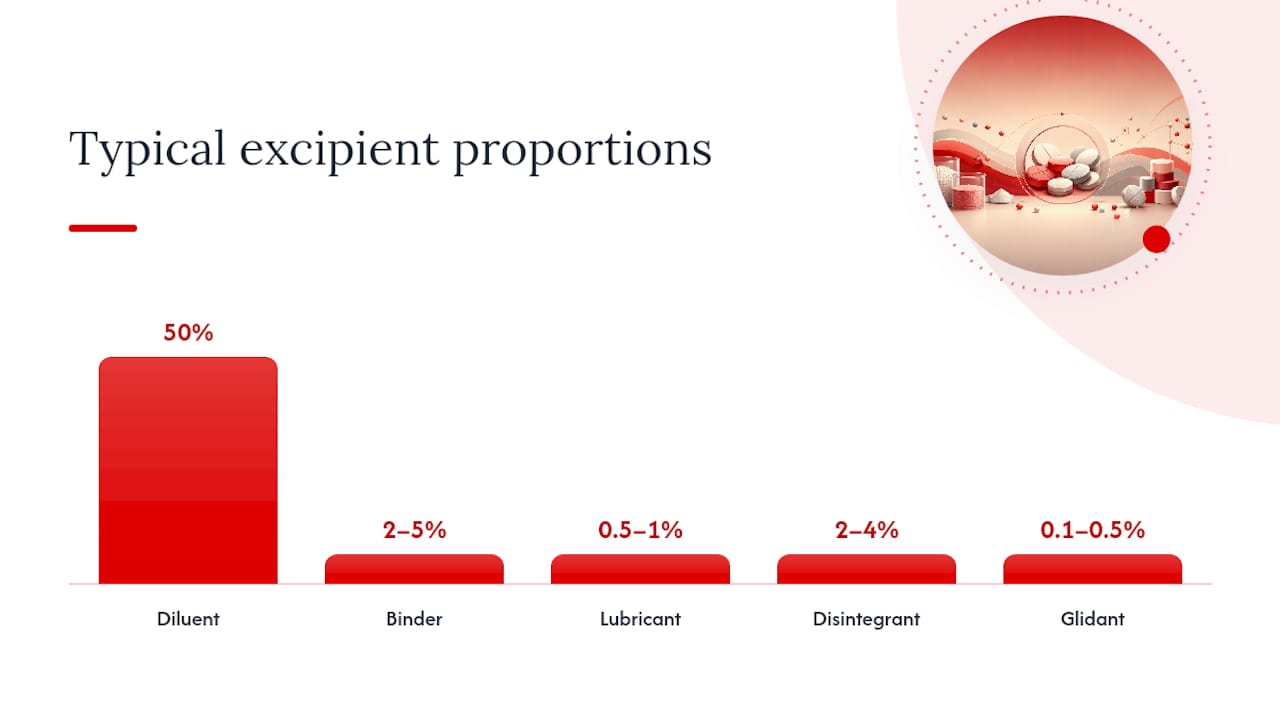
Lubricants (magnesium stearate, sodium stearyl fumarate): reduce die-wall friction; limit magnesium stearate to 0.5–1% to avoid hydrophobic film formation that slows dissolution.
Disintegrants (croscarmellose sodium, sodium starch glycolate): promote rapid tablet break-up; target disintegration under 15 minutes for analytical dissolution work.
Glidants (colloidal silicon dioxide): improve powder flow at 0.1–0.5%; critical for low-dose blends where active concentration is under 5%.
Alkaloids are generally hygroscopic. Avoid excipients with high moisture content or those that introduce free water into the blend, as moisture accelerates chemical degradation and can shift the declared assay between manufacture and use.
Excipient class | Example | Typical range | Compatibility note |
Diluent | Microcrystalline cellulose | 50% | Inert; preferred for alkaloid matrices |
Binder | Povidone K30 | 2–5% | Avoid if moisture-sensitive |
Lubricant | Magnesium stearate | 0.5–1% | Limit to final blend step only |
Disintegrant | Croscarmellose sodium | 2–4% | Compatible with most alkaloids |
Glidant | Colloidal silicon dioxide | 0.1–0.5% | Reduces segregation in low-dose blends |
Source all excipients at pharmaceutical or analytical grade. Research-grade alkaloid tablets used as reference materials require excipients with documented purity and low heavy-metal content to avoid interfering peaks in MS or HPTLC runs.
Pro Tip: Request a full excipient specification sheet alongside the active-ingredient COA. An undocumented excipient impurity at trace levels can produce a ghost peak in GC‑MS that wastes hours of troubleshooting time.
Analytical QC tests and validation targets for 7OH batches
A minimum QC panel for research-grade 7OH tablets covers both physical and chemical parameters. Physical integrity indicators such as hardness, weight variation, and disintegration time directly affect dissolution and extraction performance in analytical protocols.
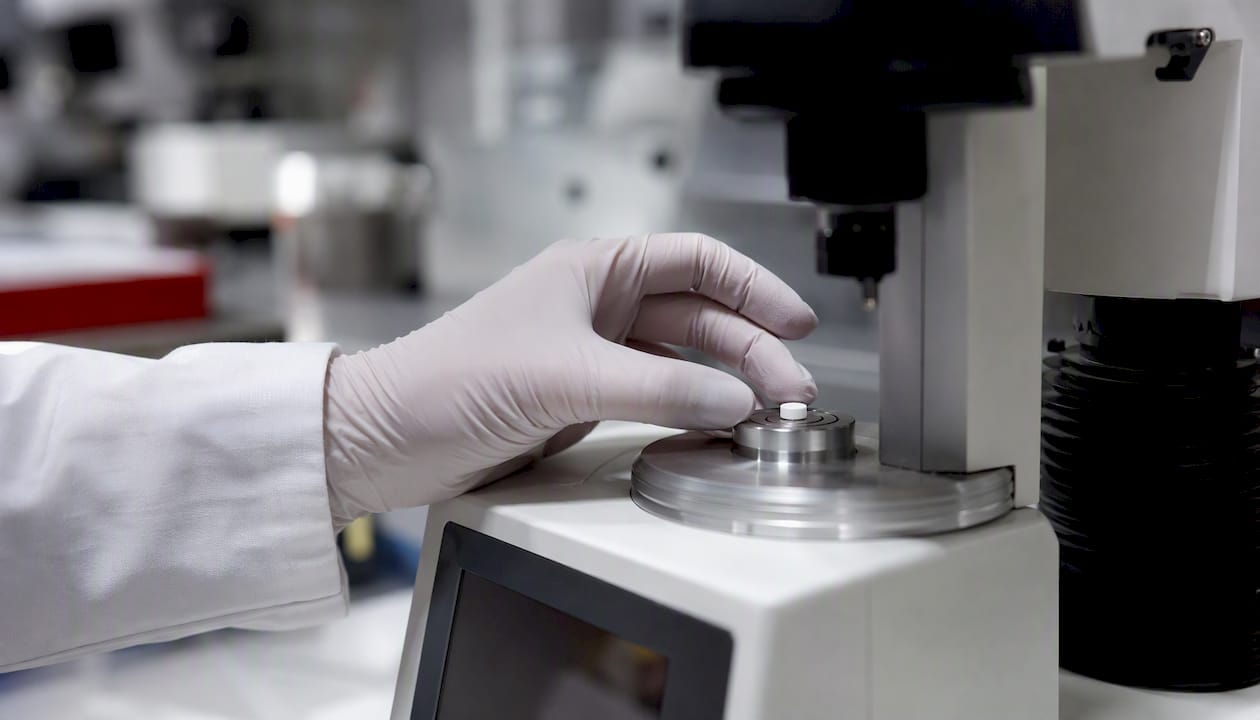
Dry-pressed alkaloid tablets validated with XRD, FTIR, dissolution, and GC‑MS checks have demonstrated stable shelf life and reliable reagent performance, confirming that instrumental characterisation is the standard for alkaloid tablet validation.
QC parameter | Typical target | Sampling point |
Weight variation | ±5% of mean | Every 50 units during compression |
Hardness | 4–8 kP (research tablets) | Every 25 units |
Friability | <1% | End of compression run |
Disintegration | <15 minutes | 6 units per batch |
Assay (HPLC/UPLC) | around 100% of declared | Beginning, middle, end of batch |
Content uniformity | RSD ≤15% | 10 units minimum |
For instrumental identity confirmation, request HPTLC or GC‑MS fingerprinting data from your supplier. Mass-spectrometer compound parameters and calibration procedures from recent alkaloid studies are directly reusable for designing LC‑MS/MS assays for 7OH, provided labs use verified reference standards.
A UPLC‑MS/MS validation paper documents stock-solution preparation in DMSO, dilution in aqueous methanol, and internal-standard use — steps directly applicable to 7OH quantification workflows.
Prepare stock solutions at a verified concentration using a calibrated analytical balance.
Prepare calibration standards across the expected assay range (at least six non-zero points).
Prepare QC samples at low, mid, and high concentrations independently of calibration standards.
Run each QC level in triplicate; calculate RSD and RE for each level.
Confirm identity by HPTLC or GC‑MS before accepting any batch for study use. See 7OH detection methods for chromatographic protocols specific to 7OH.
Powder vs tablet: choosing the right form for your workflow
The choice between powder and tablet for 7OH research materials is not a matter of preference. It depends on what the assay demands.
Criterion | Powder | Tablet |
Handling and dosing accuracy | Higher weighing error at low doses; requires calibrated microbalance | Pre-compressed unit dose; lower operator error |
Dosage customisation | Flexible; any concentration possible | Fixed at 15 mg, 30 mg, or 50 mg per unit |
Purity / declared assay | Declared by weight; verify by HPLC | Declared per unit; verify by content uniformity |
Stability and storage | More hygroscopic surface area; requires desiccant and sealed vials | Compressed matrix slows moisture ingress |
HPTLC / GC‑MS suitability | Direct dissolution; minimal matrix | Requires disintegration step; excipient matrix present |
Dissolution testing | N/A as a format | Directly testable per USP apparatus |
For stock-solution preparation and gravimetric reference work, powder is the practical choice. For routine calibration standards, dose-uniformity studies, and stability protocols, tablets at 15 mg or 30 mg reduce operator variability and simplify traceability. A researcher’s protocol guide comparing both formats covers practical recommendations for each use case.
Pro Tip: When using tablets for GC‑MS or HPTLC work, disintegrate a single unit in a known volume of solvent and filter before injection. This removes particulate excipient material that can contaminate the column or distort the chromatogram.
Small-batch method development: powder (flexibility for concentration adjustment)
Routine calibration standards: tablet (reproducibility and traceability)
Stability studies: tablet (defined physical form; easier to track physical changes)
SOP checklist and minimum batch documentation
A functional SOP for small-batch 7OH tablet production covers materials, equipment, environment, and records in a single controlled document.
List all materials by lot number, grade, and supplier before starting.
Record equipment calibration dates for balance, blender, and tablet press.
Log environmental conditions (temperature, RH) at the start and end of each processing step.
Document mixing times, blending RPM, and compression force settings.
Record in-process check results (weight, hardness) with operator initials and timestamps.
Note any deviation from the SOP and the corrective action taken.
Retain a minimum of three tablets per batch as retention samples, stored under the same conditions as the study material.
Minimum batch record items:
Lot number and batch size
Active ingredient assay result and COA reference
Operator initials for each processing step
In-process and final QC results
Deviation log with corrective actions
Release or reject decision with authorising signature
For content uniformity and impurity testing, sample 10 units for assay and uniformity from any batch under 100 units. For batches of 100–300 units, sample 20 units. Retain impurity samples at the same storage condition as the batch for the full study duration.
Pro Tip: Label retention samples with lot number, assay date, operator initials, and storage condition at the time of sealing. A retention sample with incomplete labelling is functionally useless for troubleshooting six months later.
How to store 7OH powders and tablets and what to monitor
Storage conditions for hygroscopic alkaloid preparations are not optional parameters. Moisture ingress is the primary driver of both chemical degradation and physical tablet failure in 7OH materials.
Powder: store in amber glass vials with PTFE-lined caps, sealed with desiccant, at 2–8°C. Avoid repeated freeze-thaw cycles.
Tablets: store in sealed blister packs or amber glass with silica gel desiccant at 15–25°C, away from direct light.
Container labelling: include lot number, assay date, declared concentration, storage condition, and expiry or retest date.
Stability-monitoring schedule:
Initial (T=0): assay, degradation products by HPLC, physical integrity (hardness, appearance).
One month: assay and moisture content (Karl Fischer or gravimetric).
Three months: full panel — assay, degradation products, hardness, disintegration.
Six months: full panel plus HPTLC or GC‑MS identity confirmation.
Physical changes — softening, colour shift, surface bloom — often appear before chemical degradation reaches assay-failure thresholds. Track hardness and appearance at every monitoring point, not just at the six-month mark.
Pro Tip: *Run a 40°C/75% RH accelerated stability check on a small subset of each new batch for four weeks.
Safety protocols and legal considerations for 7OH research materials
Handling a potent alkaloid in a research setting requires documented controls at every stage, from procurement to waste disposal.
Control area | Requirement |
PPE | Nitrile gloves, lab coat, safety glasses; respirator when handling powder |
Containment | Weigh in a ventilated enclosure or fume hood; use closed transfer vessels |
Spill response | Absorb with inert material; dispose as chemical waste per institutional protocol |
Waste disposal | Segregate alkaloid waste; label and dispose through licensed chemical waste contractor |
Institutional approval | Confirm chemical inventory registration and any controlled-substance licence requirements before ordering |
Chain of custody | Maintain a receipt-to-disposal log for every lot |
Institutional approvals to verify before procurement:
Chemical inventory registration for the specific alkaloid
Controlled-substance licence, if required under federal or provincial regulation
Ethics or IACUC approval if the material is used in any biological assay
Institutional biosafety or chemical safety committee sign-off
When qualifying a supplier, request a COA that includes declared assay, identity confirmation method (HPTLC or GC‑MS), heavy-metal screen, residual solvent data, and lot-specific batch records. A buying guide for 7OH tablets outlines supplier qualification criteria and COA content to request.
Pro Tip: Ask the supplier for the specific instrumental method used for identity confirmation — not just “tested by HPTLC” but the solvent system, plate type, and reference standard used. Vague identity claims on a COA are a red flag for reference materials.
These materials are for research use only and are not intended for human consumption. Confirm compliance with all applicable federal and provincial regulations before acquisition.
What research labs often get wrong about 7OH reference materials
The conventional assumption in many labs is that a COA alone is sufficient to qualify a reference material. It is not. A COA documents what the supplier measured; it does not confirm that the measurement method was fit for purpose, that the reference standard used for quantification was itself verified, or that the batch was produced under conditions that support content uniformity at the unit level.
Labs that accept a COA without requesting the underlying instrumental data — the chromatogram, the calibration curve, the reference standard lot — are essentially accepting a claim without evidence.
The second gap is stability. Many labs store alkaloid reference materials at room temperature in the original packaging, then wonder why assay results drift between study timepoints. Physical integrity checks at each stability monitoring point, not just chemical assay, catch moisture-related degradation before it invalidates a dataset.
Research-grade 7OH materials from 7ohyea
7ohyea supplies research-grade 7-hydroxymitragynine tablets and powder in verified dosage forms — 15 mg, 30 mg, and 50 mg tablets, plus 83% pure 7OH powder — sourced and quality-controlled in British Columbia. Every product ships with a lot-specific COA that includes declared assay, identity confirmation by instrumental fingerprinting, and batch records. For labs that need a specific dosage or formulation configuration, 7ohyea offers custom options with supporting protocol documentation.
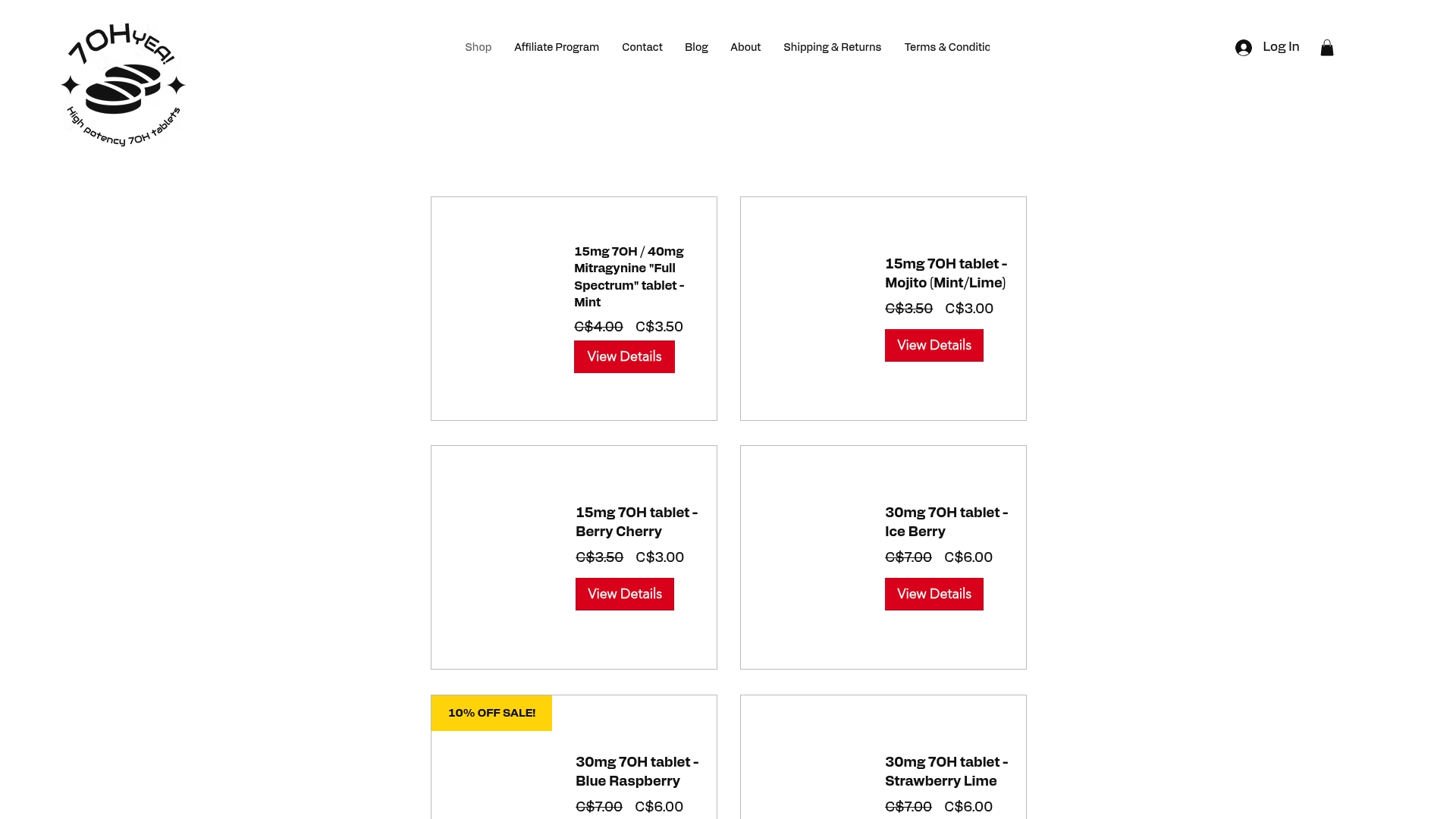
Labs that need to move quickly on procurement benefit from domestic Canadian sourcing: no cross-border delays, no customs uncertainty, and direct access to the batch records and QC data your institutional compliance team will ask for. Protocol guides covering friability testing, tablet friability protocols, and detection methods are available on the 7ohyea site. To order or discuss a custom dosage configuration, visit 7ohyea and submit a research inquiry directly.
Sources
What to request from your supplier: COA with declared assay, identity confirmation method (instrument type, solvent system, reference standard lot), heavy-metal screen, residual solvent data, and lot-specific batch records.
This article is general information, not a substitute for advice from a qualified lawyer. Consult a qualified legal professional about your own circumstances before acting on anything here.
FAQ
What is the standard RSD threshold for 7OH tablet content uniformity?
Which form, powder or tablet, is better for HPTLC and GC‑MS work?
Powder dissolves directly with minimal matrix interference, making it preferable for HPTLC and GC‑MS identity confirmation; tablets require a disintegration step and filtration before injection.
What must a COA for research-grade 7OH include?
A compliant COA should include declared assay, the identity confirmation method (instrument, solvent system, reference standard lot), heavy-metal screen results, residual solvent data, and lot-specific batch records.
What storage conditions apply to 7OH tablets and powder?
Tablets store at 15–25°C with silica gel desiccant in sealed amber containers; powder stores at 2–8°C in PTFE-capped amber vials with desiccant, away from light and moisture.
Where can Canadian labs purchase validated 7OH reference materials?
7ohyea supplies research-grade 7OH tablets (15 mg, 30 mg, 50 mg) and powder with full COA and batch documentation, shipped domestically from British Columbia. Visit 7ohyea to submit a research inquiry.
Recommended
Comments