
ISO 17034 vs 17025: What Lab Buyers Need to Know
- 7OHyea
- Aug 1
- 8 min read


For Canadian researchers purchasing certified reference materials (CRMs) like research-grade 7-hydroxymitragynine, prioritize ISO 17034:2016-accredited suppliers over those offering ISO/IEC 17025:2017 test reports alone. The distinction is not administrative; it determines whether your reference material carries a certified value, documented measurement uncertainty, and ongoing stability assurance for its entire shelf life.
Here is the short version of why it matters:
ISO 17034:2016 governs reference material producers (RMPs): it mandates homogeneity studies, long-term stability monitoring, and value-assignment protocols that guarantee the certified value holds until expiry.
ISO/IEC 17025:2017 governs testing and calibration laboratories: it proves measurement competence at the time of testing but does not require ongoing stability monitoring or lifetime traceability for produced materials.
In Canada, the two primary accreditation bodies you will encounter are the Standards Council of Canada (SCC) and the Canadian Association for Laboratory Accreditation (CALA), both recognized under the ILAC Mutual Recognition Arrangement (MRA).
A supplier holding only ISO/IEC 17025 accreditation cannot issue a Certificate of Analysis (CoA) for a CRM under that scope; producing and certifying reference materials requires ISO 17034 accreditation.
Table of Contents
How do ISO 17034 and ISO/IEC 17025 actually differ?
The functional difference is scope: ISO/IEC 17025 certifies a lab’s competence to produce valid measurement results; ISO 17034 certifies a producer’s competence to manufacture, characterize, and maintain reference materials over time.
ISO 17034 incorporates the technical requirements of ISO/IEC 17025 (specifically section 7.6 on measurement uncertainty) and then extends them for production workflows, adding statistical homogeneity evaluation, stability study design, and post-release monitoring obligations. Think of ISO/IEC 17025 as the foundation and ISO 17034 as the additional structure built on top for RMP work.

Dimension | ISO/IEC 17025:2017 | ISO 17034:2016 |
Scope / purpose | Competence of testing and calibration labs | Competence of reference material producers |
Primary deliverable | Test report or calibration certificate | Certified reference material with lot-specific CoA |
Statistical requirements | Method validation; measurement uncertainty at time of test | Homogeneity studies + stability studies (statistical design required) |
Traceability | Traceable to SI at time of measurement | Traceable to SI over the material’s entire certified lifetime |
Ongoing monitoring | Not mandated post-report | Mandatory continuous post-release stability monitoring |
Assessment focus | Lab methods, equipment, personnel competence | Production workflow, characterization, value assignment, QA system |
What it guarantees the RM buyer | Valid measurement result at one point in time | Certified value + uncertainty valid until stated expiry |
A key nuance: ISO 17034 also blends ISO 9001 management-system elements with the technical rigor of ISO/IEC 17025, creating an end-to-end quality framework specific to RMP operations. An ISO/IEC 17025-accredited lab can serve as a subcontractor for characterization sub-tasks during RM production, but it cannot issue the CoA for the finished CRM under that accreditation alone.
Why these differences matter when buying 7OH reference materials
When your method validation or regulatory submission depends on a 7-hydroxymitragynine reference material, the standard behind the CoA is not a formality. ISO 17025 test reports do not mandate ongoing stability monitoring, which means the certified value stated at the time of characterization may degrade without any obligation on the supplier to detect or report it.
Concrete procurement risks from accepting a 17025-only characterized material:
No lifetime traceability guarantee. The uncertainty budget applies at the moment of measurement, not across the material’s shelf life.
No mandatory homogeneity data. Lot-to-lot and within-lot variation may not be statistically characterized.
Downstream validation failures. If the reference value drifts and no monitoring plan exists, your calibration curves and method validation data can become unreliable without warning.
ISO 17034-certified RMs address all three risks directly. The producer must document homogeneity across the batch, run stability studies that cover the intended shelf life, and maintain monitoring after release. The CoA will carry a certified value, an uncertainty budget, a traceability statement, and an expiry date backed by real stability data.
Pro Tip: For method validation, inter-laboratory comparisons, or any submission to a Canadian regulatory body, specify in your purchase order that the CoA must reference ISO 17034 accreditation and include explicit stability and homogeneity data. Accepting a 17025 test report as a substitute is one of the most common procurement errors in analytical chemistry.
What documents should you request before buying 7OH reference materials?
Request these items from any supplier before placing an order:
Lot-specific Certificate of Analysis with certified value, measurement uncertainty, and expiry date
Accreditation certificate showing ISO 17034:2016 (or ISO/IEC 17025:2017 for sub-tasks) with explicit scope and certificate number
Homogeneity study report covering within-lot and between-unit variation
Stability study report with the monitoring plan and intervals used
Method validation details and metrological traceability statements
Storage, shipping, and expiry conditions
Contact for technical queries and the name of the accrediting body
Document | What it guarantees |
Lot-specific CoA | Certified value + uncertainty valid to stated expiry |
ISO 17034 accreditation cert + scope | Producer is assessed for RM production competence |
Homogeneity report | Batch uniformity is statistically confirmed |
Stability report + monitoring plan | Certified value is supported across the shelf life |
ILAC-MRA signatory accreditor | International mutual recognition of the accreditation |
Because ISO 17034 accreditation is customized through dialogue between the RMP and the assessor, documentation formats will vary between producers. What should not vary is the presence of all five document types above.
Can one organization hold both ISO 17034 and ISO/IEC 17025 accreditations?
Yes, but the scopes must be managed separately. A lab accredited to ISO/IEC 17025 cannot use that accreditation to certify a reference material; producing and certifying materials requires ISO 17034 accreditation. The two activities must not overlap on the same certificate scope.
Combined audits are permitted by some accreditation bodies to reduce administrative burden, but the scope language on each certificate must remain distinct. A CoA issued under ISO 17034 scope must relate to the batch as a certified reference material; a test report issued under ISO/IEC 17025 scope relates only to the specific sample tested.
As a buyer, verify:
The accreditation certificate explicitly lists ISO 17034:2016 and names reference material production in the scope.
The CoA references the ISO 17034 accreditation number, not a 17025 test report number.
If scope language is ambiguous, contact the accrediting body directly to confirm what the certificate covers.
How to verify accreditation credentials in Canada
Canadian buyers can confirm supplier credentials through a straightforward process:
Check the accreditation certificate PDF for ISO 17034:2016 or ISO/IEC 17025:2017 and confirm the scope explicitly covers RM production.
Confirm the accrediting body is an ILAC-MRA signatory. SCC and CALA are both recognized; ILAC-MRA signatory status means the accreditation is mutually recognized internationally, which matters for cross-border method submissions.
Cross-check the certificate number against the accreditor’s online public register when available.
Request the lot-specific CoA along with the homogeneity and stability reports before finalizing the purchase order.
ILAC-MRA signatory status is particularly relevant for Canadian labs submitting data to international bodies or working under Good Laboratory Practice (GLP) for reference standards, where the provenance of every CRM must be defensible.
Pro Tip: Ask the supplier for a brief email that maps each CoA claim to the specific clause in their ISO 17034 accreditation scope. This single step eliminates most ambiguity during procurement review and gives your QA file a clean audit trail.
How 7ohyea’s 7OH materials align with ISO 17034 buyer needs
7ohyea sources and manufactures research-grade 7-hydroxymitragynine in British Columbia, offering tablets and powders across multiple purity grades, including 77% pure 7OH powder and 93% pure 7OH powder, alongside customizable dosage formats at 15mg, 30mg, and 50mg. Domestic sourcing supports traceability by keeping the production chain within a single regulatory jurisdiction.
When evaluating 7ohyea product pages against your procurement checklist, look for:
Stated purity grades and lot-specific test documentation
Storage and handling conditions listed on product pages
Dosage options that support method development across concentration ranges
Contact access for technical and QA queries
For laboratory detection methods and method validation work, the availability of multiple purity grades means you can build calibration curves and spike matrices without sourcing from multiple suppliers. Before placing an order, request the lot-specific CoA, any available homogeneity and stability documentation, and the accreditation certificate with scope from 7ohyea directly to confirm the evidence matches your procurement requirements.
Key Takeaways
ISO 17034-certified reference materials provide lifetime traceability, homogeneity confirmation, and mandatory stability monitoring that ISO/IEC 17025 test reports alone cannot guarantee.
Point | Details |
ISO 17034 vs 17025 core difference | ISO 17034 certifies RM producers with lifetime stability and homogeneity obligations; ISO/IEC 17025 certifies lab measurement competence at one point in time. |
CoA is not interchangeable | Only an ISO 17034-accredited producer can issue a CRM CoA; a 17025 test report cannot substitute for it. |
Verify accreditor status | Confirm the accrediting body (SCC or CALA in Canada) is an ILAC-MRA signatory and that the certificate scope explicitly lists RM production. |
Minimum document set | Request lot-specific CoA with uncertainty, homogeneity report, stability report, and accreditation certificate before any purchase. |
7ohyea for Canadian labs | 7ohyea offers research-grade 7OH tablets and powders sourced in British Columbia; request lot-specific CoA and QA documentation directly before ordering. |
The procurement reality most labs learn the hard way
The most persistent problem in CRM procurement is not a lack of standards knowledge; it is the gap between what a supplier presents and what a buyer actually verifies. A supplier who hands over a polished 17025 test report and calls it “certification” is not necessarily being deceptive. They may simply not hold ISO 17034 accreditation and may not understand why the distinction matters to your validation workflow.
The practical consequence shows up months later, when a stability-related drift in your reference material invalidates a calibration curve and you have no monitoring data to diagnose it. At that point, the procurement file either has the right documents or it does not.
Including CRM evidence requirements directly in the purchase order, specifically the lot-specific CoA, the accreditation certificate with scope, and the stability report, removes the ambiguity before it becomes a problem. Lead time and batch documentation availability often determine whether a lab accepts a material; asking for these documents upfront also tells you something about the supplier’s readiness to support your work.
Research-grade 7OH reference materials available in Canada
Canadian research labs need a supplier who can provide documented purity, lot traceability, and the QA records your procurement process requires. 7ohyea offers research-grade 7-hydroxymitragynine tablets and powders manufactured in British Columbia, with multiple purity grades and dosage formats designed for analytical use. The domestic supply chain keeps traceability straightforward, and the product range supports everything from calibration curve development to comparative method validation.
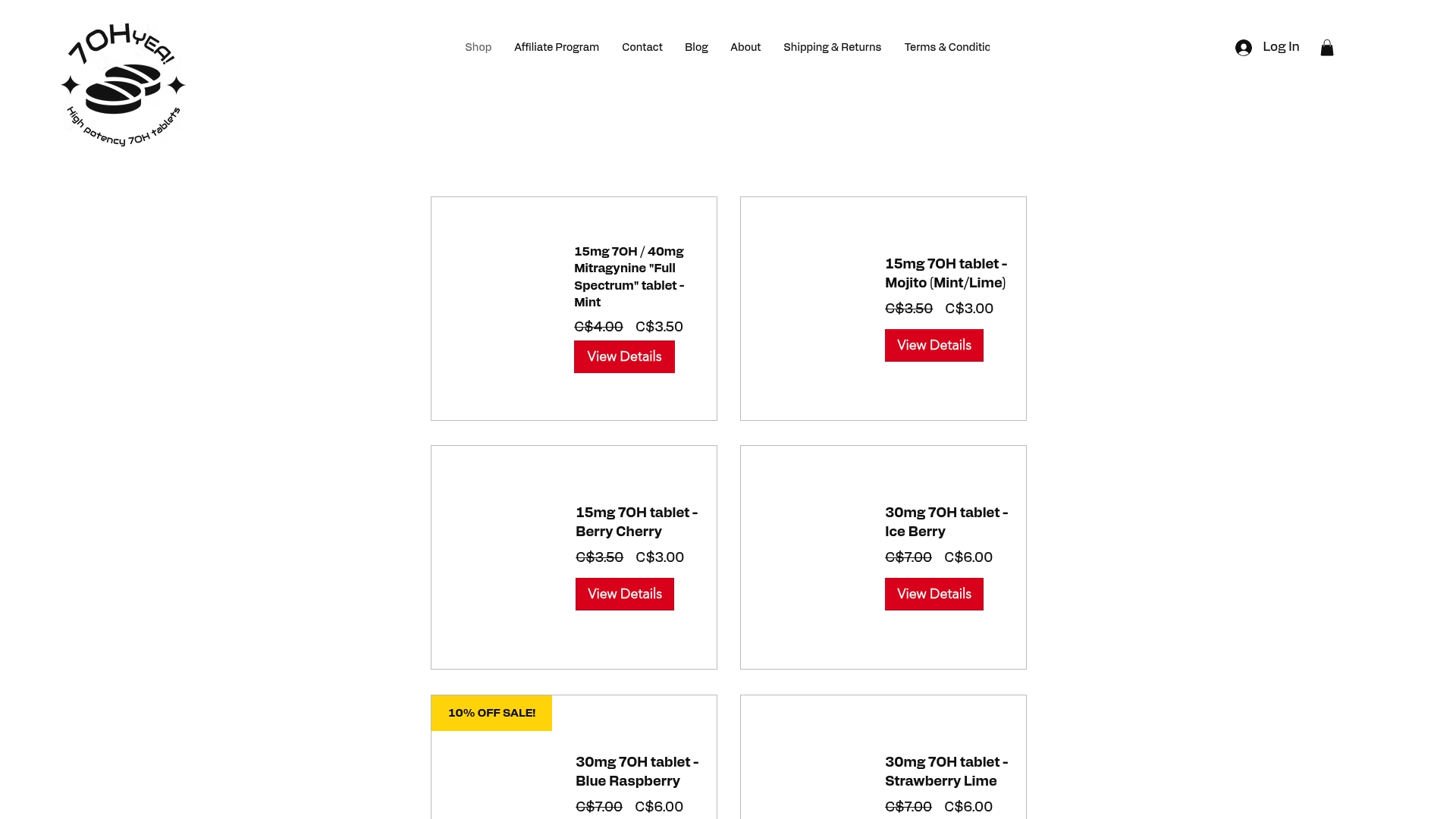
Before placing an order, request the lot-specific CoA, accreditation certificate with explicit scope, and any available homogeneity and stability documentation. You can review the full product range and begin your procurement due diligence at 7ohyea.ca. For dose-specific options, the 30mg 7OH tablet is a practical starting point for method development work.
This article provides general informational guidance on laboratory accreditation standards and procurement practices. It is not a substitute for advice from a qualified metrologist, accreditation body, or regulatory professional. Confirm current accreditation status and documentation requirements directly with your supplier and the relevant accrediting body for your specific situation.
Authoritative sources and further reading
The following sources are the canonical references for ISO 17034 and ISO/IEC 17025 accreditation requirements, accreditor guidance, and verification procedures. Keep records of your accreditor checks in vendor files for audits and method validation documentation.
ISO 17034:2016 — ISO.org: The primary standard text; use this to confirm scope language and production requirements when reviewing supplier documentation.
A2LA ISO 17034 Reference Materials Producers Accreditation: Accreditor guidance on what ISO 17034 assessment covers and how it extends beyond ISO/IEC 17025; useful for understanding what an assessor evaluates.
ANAB ISO 17034 RMP Accreditation: Explains how ISO 17034 blends ISO 9001 management-system requirements with ISO/IEC 17025 technical rigor; relevant for understanding the full QA framework.
ANSI Blog — What Is ISO 17034?: Accessible overview of how ISO 17034 differs from ISO/IEC 17025 and what accreditation covers for RMPs.
European Accreditation — Dual Accreditation FAQ: Authoritative guidance on scope management when an organization holds both ISO 17034 and ISO/IEC 17025 accreditations; directly relevant to verifying certificate scope language.
Standards Council of Canada (SCC) and CALA: Both are ILAC-MRA signatories. Verify current signatory status and search accredited organizations through their respective online registers to cross-check supplier certificate numbers.
Recommended
Comments