
Hazardous Materials Shipping in Canada: TDG Compliance Guide
- 7OHyea
- Aug 10
- 14 min read


Shipping hazardous materials in Canada means complying with the Transportation of Dangerous Goods Regulations, and the legal responsibility for correct classification, packaging, and documentation falls on the consignor before the shipment ever reaches a carrier. Three actions must happen before you tender a dangerous goods shipment:
Identify the UN number and proper shipping name for your product using the TDG Schedule 1 or your product’s Safety Data Sheet (SDS), Section 14.
Prepare a TDG shipping document that includes all required fields, a 24-hour emergency telephone number, and your consignor certification.
Confirm carrier acceptance by reviewing the carrier’s dangerous goods manual, verifying account requirements, and ensuring trained personnel are available at intake.
Emergency contact: CANUTEC (Canadian Transport Emergency Centre) operates 24 hours a day, 7 days a week. In an incident, call 1-888-CANUTEC (226-8832). Consignors who need a 24-hour number for their shipping documents can register online with CANUTEC at no cost. Keep this number on every applicable shipping document.
Key Takeaways
Shipping dangerous goods in Canada requires correct classification, a complete TDG shipping document with a 24-hour emergency number, compliant packaging, confirmed carrier acceptance, and two-year record retention.
Point | Details |
Classification is the first step | Confirm UN number, proper shipping name, hazard class, and packing group from your current SDS and TDG Schedule 1 before preparing any document. |
Shipping document must be complete | All required fields must be present, including the container count for small means of containment and the 24-hour emergency number. |
Packaging and labels must comply | Use TDG Part 5-compliant means of containment, apply correct labels, and fully remove all prior dangerous goods markings from reused packaging. |
Confirm carrier acceptance before booking | Review the carrier’s current dangerous goods manual and verify your account, UN number acceptance, and trained intake personnel. |
Retain records for two years | Keep copies of all shipping documents for at least two years; training records must also be available for inspection on request. |
7ohyea supplies compliant documentation | Research-grade 7OH materials from 7ohyea include SDS and Certificates of Analysis to support accurate TDG classification and shipping document preparation. |
Table of Contents
What counts as dangerous goods under Canadian TDG regulations?
How to prepare a compliant dangerous goods shipment step by step
How do mode-specific rules affect your dangerous goods shipment?
Common mistakes that cause intake rejections and inspection flags
Research-grade materials with documentation support from 7ohyea
What counts as dangerous goods under Canadian TDG regulations?
Under the TDG Act, “dangerous goods” are substances or products that meet the criteria for one or more of nine hazard classes. If your product fits any class, TDG rules apply to its transport regardless of quantity, unless a specific exemption covers your situation.
The nine TDG hazard classes are:
Class 1 — Explosives: Substances that detonate or deflagrate (e.g., fireworks, detonators).
Class 2 — Gases: Compressed, liquefied, dissolved, or refrigerated gases (e.g., propane, aerosols, oxygen cylinders).
Class 3 — Flammable Liquids: Liquids with a flash point below 60°C (e.g., ethanol, acetone, methanol).
Class 4 — Flammable Solids / Spontaneously Combustible / Dangerous When Wet: Includes sodium, magnesium powder, and similar reactive solids.
Class 5 — Oxidizing Substances and Organic Peroxides: Hydrogen peroxide solutions above certain concentrations, benzoyl peroxide.
Class 6 — Toxic and Infectious Substances: Includes many research chemicals, alkaloid reference materials, and biological agents.
Class 7 — Radioactive Materials: Any material with radioactive content above exempt quantities.
Class 8 — Corrosives: Acids and bases that destroy tissue on contact (e.g., hydrochloric acid, sodium hydroxide).
Class 9 — Miscellaneous: Substances that present a hazard during transport but don’t fit Classes 1–8 (e.g., dry ice, lithium batteries, magnetized materials).
How UN numbers and proper shipping names work
Every regulated dangerous good is assigned a four-digit UN number and a proper shipping name in the TDG Schedule 1. For example, flammable laboratory solvents like ethanol appear as UN1170 (Ethanol solution), while many alkaloid-based research compounds may fall under Class 6.1 toxic substances entries. The SDS for your product, specifically Section 14 (Transport Information), lists the UN number, proper shipping name, hazard class, and packing group that apply to TDG transport. CCOHS confirms that suppliers bear ongoing responsibility for keeping SDS information accurate at the point of sale, so always verify the SDS is current before using it for classification.
Pro Tip: Cross-reference your SDS Section 14 against the TDG Schedule 1 directly. SDS entries sometimes reflect international standards (IATA, IMDG) that differ slightly from TDG road classifications. When in doubt, the TDG Regulations take precedence for Canadian ground transport.
How to prepare a compliant dangerous goods shipment step by step
This checklist follows the sequence Transport Canada expects consignors to complete before handing a shipment to a carrier.
Classify the dangerous goods. Confirm the UN number, proper shipping name, hazard class (primary and any subsidiary), and packing group using TDG Schedule 1 and your current SDS. If classification is uncertain, contact a TDG consultant or Transport Canada’s TDG Directorate before proceeding.
Select compliant packaging. Choose means of containment that meet TDG Part 5 standards for the class and packing group. Verify that packaging is undamaged, properly sealed, and free of prior dangerous goods markings (see Section 5 below for reuse rules).
Apply required labels and safety marks. Affix the correct TDG hazard labels to each package. For shipments meeting placard thresholds, apply placards to the transport vehicle or container.
Prepare the TDG shipping document. Complete all required fields in the correct order (detailed in Section 4 below). The document must be legible, indelible, and written in English or French.
Include the 24-hour emergency telephone number. The words “24-hour number” followed by the phone number must appear on the shipping document. Register with CANUTEC if you do not already have a qualifying number.
Add the consignor certification. Sign and date the document, certifying that the contents are fully and accurately described and are in proper condition for transport.
Confirm carrier acceptance before booking. Review the carrier’s dangerous goods manual (FedEx Canada and UPS Canada both publish current DG acceptance guides on their websites). Verify that your account is set up for dangerous goods, that trained personnel will be present at intake, and that your specific UN number is accepted on that service.
Retain documentation. Keep a copy of every shipping document for at least two years from the date it was prepared or given to the carrier. This is a frequent audit point.
What fields does a TDG shipping document require?
A shipping document is required for virtually every dangerous goods transfer in Canada. The TDG bulletin on shipping documents specifies the exact fields and their order. The consignor prepares this document; the carrier must have a printed copy accessible in the vehicle during transport.
The required information must appear in this sequence:
Field | Required Content |
Consignor name and address | Full legal name and Canadian address of the person offering the goods for transport |
Date | Date the document was prepared or the goods were offered for transport |
UN number | “UN” followed by the four-digit number (e.g., UN1170) |
Proper shipping name | The name from TDG Schedule 1 (e.g., Ethanol Solution) |
Technical name | Required for certain Class 6.1 and Class 9 entries where the shipping name is generic |
Primary hazard class | The class number (e.g., 3, 6.1) |
Subsidiary hazard class | Listed in parentheses after the primary class, when applicable |
Packing group | Roman numeral I, II, or III |
Quantity | Total quantity in SI units (kg or L), with unit stated |
Number of small means of containment | Count of individual containers requiring labels (for small means of containment ≤450 L) |
24-hour number | The words “24-hour number” followed by the phone number |
ERAP reference | ERAP number and phone, when an ERAP applies to the UN number |
Flashpoint | Required for Class 3 flammable liquids |
Marine pollutant notation | Required when shipping by marine vessel |
Consignor certification | Signed declaration that the shipment is properly classified, packed, marked, and in proper condition |
Electronic shipping documents are permitted when Transport Canada has issued an equivalency certificate for the system in use. Before switching to e-docs, confirm that your carrier and driver can produce a printed copy on demand, as the vehicle must carry a printed version.
Bilingual note: The document may be in English or French. If your carrier operates across both linguistic regions, consider preparing bilingual documents to avoid delays at provincial checkpoints.
Packaging, labels, safety marks, and common exemptions
Use means of containment that meet TDG Part 5 standards and apply required labels and safety marks per Part 4. The TDG Regulations define when Parts 3 through 5 do not apply, and those exemptions carry strict conditions.
Small means of containment, limited quantities, and key exemptions
A “small means of containment” is any container with a capacity of 450 L or less. Most lab and small-business shipments fall into this category. The shipping document for such a shipment must state the number of small means of containment that require labels. Missing this count is one of the most common reasons carriers reject shipments at intake.
The table below summarizes the three exemptions that most frequently apply to labs and small shippers:
Exemptions are not automatic. Every condition listed in the applicable section of the TDG Regulations must be met simultaneously. Failing even one condition voids the exemption and makes the full requirements apply retroactively.
Label and placard requirements
A small-package label must display the hazard class symbol, the class number, and the UN number. Placards are required on vehicles when the total quantity of dangerous goods exceeds the placard thresholds set in TDG Part 4. For most Class 3 and Class 6.1 shipments, placards are required when gross mass exceeds 500 kg.
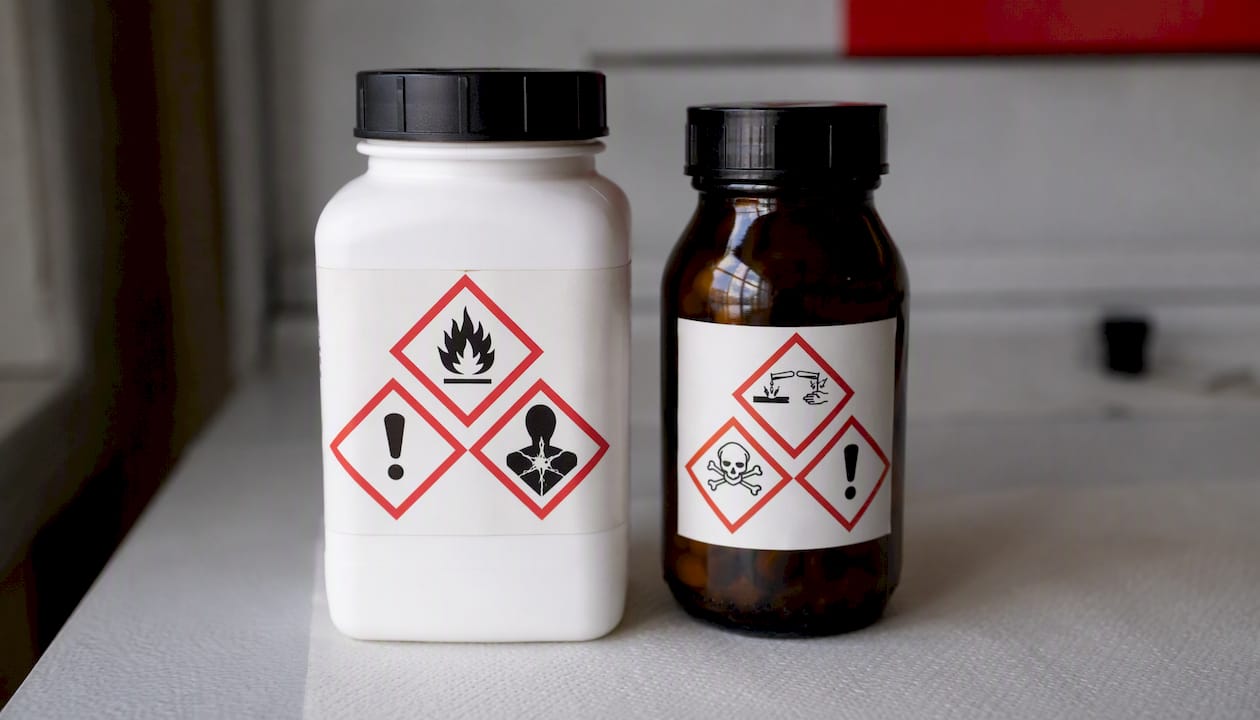
When reusing packaging, Canada Post’s dangerous goods guidance confirms that all prior dangerous goods labels and markings must be completely removed or obliterated before the package is used for a new shipment. Simply covering old marks with tape or a sticker is often insufficient and will cause carriers to refuse the shipment.
Pro Tip: Before reusing any box, run your hand across every surface. If you can feel the impression of an old label or printed marking, the packaging is not compliant. Use fresh outer packaging for high-value or time-sensitive dangerous goods shipments.
How do mode-specific rules affect your dangerous goods shipment?
The mode of transport determines which additional regulatory frameworks apply on top of TDG. Air and marine shipments carry stricter limitations than road or rail for most dangerous goods classes.
Mode | Additional Framework | Key Differences | Quantity Limits / Exemptions | Special Approvals |
Road | TDG Regulations (primary) | Standard TDG rules apply; placards required above thresholds | 500 kg / limited quantity exemptions available | ERAP required for certain UN numbers |
Rail | TDG Regulations + railway-specific requirements | Blocking and bracing rules; additional placarding on rail cars | Similar to road; consult carrier tariff | ERAP may be required |
Air | ICAO Technical Instructions (harmonized with IATA DGR) | Many substances forbidden or quantity-restricted; shipper’s declaration required | Significantly lower per-package limits; passenger vs. cargo aircraft distinctions | Dangerous goods training to ICAO standard required |
Marine | IMDG Code + TDG for domestic legs | Marine pollutant notation required; stowage and segregation rules apply | Varies by IMDG class; some substances require segregation from food | ERAP may be required; Transport Canada marine notice compliance |
Confirming acceptance with FedEx Canada and UPS Canada
Both FedEx Canada and UPS Canada publish carrier-specific dangerous goods manuals that list accepted UN numbers, packaging requirements, and account setup procedures. These manuals are updated periodically, so always download the current version from the carrier’s website before booking. Key items to confirm:
Your account is enabled for dangerous goods shipments.
The specific UN number and packing group you are shipping appear on the carrier’s accepted list.
Trained dangerous goods personnel will be present at the intake location.
Any special handling surcharges or advance notification requirements are understood.
Electronic shipping documents are permitted under Transport Canada equivalency certificates, but the carrier’s driver must be able to produce a printed copy during transport. Confirm this capability with your carrier before relying on e-docs.
What to do in a dangerous goods incident: CANUTEC and ERAPs
In an incident involving dangerous goods in transport, contact CANUTEC immediately for technical guidance and follow the Emergency Response Assistance Plan (ERAP) if one applies to the UN number being transported.
CANUTEC is Transport Canada’s 24-hour emergency centre, staffed by scientists who provide real-time advice to emergency responders and carriers during incidents. The number is 1-888-CANUTEC (226-8832). For life-threatening emergencies, always call 911 first.
When is an ERAP required?
An ERAP is a pre-approved plan that describes how a consignor will respond to a dangerous goods incident. Transport Canada requires an ERAP for certain high-hazard UN numbers, particularly large quantities of toxic gases, flammable liquids, and infectious substances. When an ERAP applies:
The ERAP reference number and the ERAP holder’s 24-hour phone number must appear on the shipping document.
The ERAP must be activated immediately upon notification of an incident.
The consignor is responsible for ensuring the ERAP is current and approved by Transport Canada before the shipment moves.
Incident response checklist
Secure the scene and prevent unauthorized access to the affected area.
Isolate the product and prevent runoff or vapor spread where safe to do so.
Call 911 for life-threatening emergencies, then contact CANUTEC at 1-888-226-8832.
Activate the ERAP if one is registered for the UN number involved.
Follow carrier incident notification procedures and preserve all shipping documentation for the investigation.
Do not move or disturb damaged packaging until emergency responders have assessed the scene.
CANUTEC registration reminder: If your shipping documents require a 24-hour emergency number and you do not have one, you can register with CANUTEC online through Transport Canada’s TDG program page. Registration is free and gives you a qualifying number for your shipping documents. This step is often overlooked by first-time consignors and is one of the fastest compliance fixes available.
TDG training, record-keeping, and what inspectors check
Anyone who handles, offers for transport, or loads dangerous goods must hold TDG training appropriate to their specific duties. Consignors must retain copies of all shipping documents for at least two years from the date they were prepared or given to the carrier.
Training scope and documentation
TDG training must cover the hazard classes the employee works with, the tasks they perform (classification, packaging, documentation, loading), and the emergency procedures relevant to those tasks. There is no single national TDG certificate; training is function-specific and must be documented in a training record that includes the employee’s name, the date of training, the topics covered, and the name of the trainer or training provider. These records must be retained for two years and produced on request during an inspection.
Training must be refreshed when regulations change materially or when an employee takes on new duties involving different classes or tasks. Many organizations schedule a review every two years as a practical baseline.
What Transport Canada inspectors focus on
Transport Canada’s TDG program conducts roughly 6,000 planned and reactive inspections annually, focusing on:
Shipping document completeness and accuracy (all required fields present, correct UN number, correct class and packing group).
Packaging integrity and compliance with TDG Part 5 standards.
Correct labels and safety marks on packages and vehicles.
Consignor certification present and signed.
Training records available and current for personnel involved in the shipment.
Non-compliance and remediation
When an inspection identifies a deficiency, Transport Canada may issue a compliance order, a notice of violation, or refer the matter for prosecution under the TDG Act. Penalties can be substantial. Voluntary disclosure before an inspection is generally treated more favorably than a deficiency discovered during one. If you identify a documentation or packaging error after a shipment has moved, contact Transport Canada’s TDG Directorate promptly and document your corrective actions.
Common mistakes that cause intake rejections and inspection flags
The most frequent failures in dangerous goods shipping are incorrect or incomplete documentation, missing 24-hour numbers, wrong container counts, and old dangerous goods marks on reused boxes. Fixing these four issues eliminates the majority of carrier rejections and inspection findings for small shippers.
Practical compliance fixes for labs and small shippers
Missing small means of containment count: The shipping document must state the number of individual containers requiring labels. A document that lists only total quantity without the container count will be rejected.
Outdated SDS used for classification: CCOHS notes that suppliers no longer follow a fixed three-year update cycle; they bear ongoing responsibility for SDS accuracy at the point of sale. Verify the SDS date and confirm the UN number against TDG Schedule 1 before every shipment.
ERAP reference omitted: If your UN number requires an ERAP, the reference number and 24-hour ERAP phone must appear on the shipping document. Omitting this field is an automatic non-compliance finding.
Old DG marks on reused packaging: As Canada Post’s dangerous goods guidance confirms, previous markings must be fully removed, not just covered.
Consignor certification missing or unsigned: The certification must be signed and dated by an authorized person. A printed but unsigned document does not meet TDG requirements.
Transport Canada conducts a substantial number of inspections each year, with documentation deficiencies being the leading finding across all modes. A compliance-first culture, where every shipment goes through a pre-tender checklist, reduces both inspection exposure and carrier delays.
Pro Tip: Build a one-page pre-tender checklist specific to your most frequently shipped UN numbers. Include the correct UN number, packing group, container count format, 24-hour number, and ERAP reference (if applicable) for each product. Laminate it and post it at your shipping station. This single step catches the majority of documentation errors before they reach the carrier.
Sample operational workflow
Classify (confirm UN number and packing group from current SDS + TDG Schedule 1) → Document (complete all required shipping document fields, including container count and 24-hour number) → Pack (select compliant means of containment, apply correct labels, obliterate old DG marks) → Carrier checklist (confirm acceptance, account status, trained intake personnel) → Record retention (file shipping document copy for two years).
A practical note on compliance from the publisher
Compliance with TDG regulations is not a background concern for labs shipping research chemicals. It is the operational foundation that determines whether a shipment reaches its destination or gets refused at intake, flagged during an inspection, or delayed at a border crossing. For labs working with alkaloid reference materials, including 7-hydroxymitragynine (7OH) compounds, the classification step deserves particular care: the correct hazard class, packing group, and technical name must be confirmed against both the current SDS and TDG Schedule 1 before any shipment is prepared.
The analytical use only labeling guide published by 7ohyea addresses the specific labeling and documentation considerations that apply to research-grade materials, and it is worth reviewing alongside the TDG requirements covered here. Labs that maintain current SDS files, documented training records, and a consistent pre-tender checklist will find that TDG compliance becomes a manageable, repeatable process rather than a source of uncertainty.
Research-grade materials with documentation support from 7ohyea
Labs that need compliant research-grade alkaloid materials, along with the documentation to support safe transport, will find that sourcing domestically simplifies the process considerably. 7ohyea supplies research-grade 7-hydroxymitragynine tablets and powders manufactured in British Columbia, with Certificates of Analysis and SDS documentation available for every product. That documentation gives your team the classification data needed to prepare accurate TDG shipping documents from the start.
For labs managing bulk purchasing and TDG documentation for larger research protocols, 7ohyea’s bulk ordering options include the supporting paperwork that compliance requires. All products are sold for analytical use only and are not intended for human consumption. Purchasers remain responsible for meeting their own regulatory obligations under TDG, WHMIS, and any applicable provincial requirements.
Browse the full catalog and request documentation at 7ohyea.
Sources
The following resources are the primary references for TDG compliance in Canada. Each link goes directly to the relevant form, regulation, or guidance page.
This article is general information, not a substitute for advice from a qualified lawyer. Consult a qualified legal professional about your own circumstances before acting on anything here.
FAQ
Can you ship hazardous materials in Canada?
Yes. Dangerous goods can be shipped in Canada when the consignor complies with the Transportation of Dangerous Goods Regulations, including correct classification, compliant packaging, a complete shipping document with a 24-hour emergency number, and carrier acceptance confirmation.
What hazardous materials cannot be shipped together?
TDG Schedule 2 sets out segregation requirements that prohibit certain classes from being transported in the same means of containment or vehicle. For example, oxidizers and flammable liquids generally cannot be co-loaded without strict separation measures. Always check Schedule 2 and your carrier’s dangerous goods manual for the specific combination you are planning.
What falls under hazardous materials in Canada?
Under the TDG Act, dangerous goods include any substance or product meeting the criteria for the nine TDG hazard classes: explosives, gases, flammable liquids, flammable solids, oxidizers, toxic and infectious substances, radioactive materials, corrosives, and miscellaneous dangerous goods. Common lab examples include flammable solvents, corrosive reagents, and certain alkaloid research compounds classified under Class 6.1.
What is not allowed to be shipped to Canada?
Certain substances are prohibited from import into Canada regardless of TDG compliance, including controlled substances under the Controlled Drugs and Substances Act and items restricted under the Customs Tariff. For dangerous goods specifically, some UN numbers are forbidden on passenger aircraft under ICAO rules and may face additional restrictions under CBSA import regulations. Always confirm both TDG transport compliance and import admissibility before shipping into Canada.
How long must shipping documents be retained under TDG?
Consignors, carriers, and importers must retain copies of TDG shipping documents for at least two years from the date the document was prepared or given to the carrier. Training records must also be kept for two years and produced on request during a Transport Canada inspection.
Recommended
Comments