
Dissolution Testing Tablets for Analytical Labs: 2026 Guide
- 7OHyea
- Aug 12
- 14 min read

For U.S. analytical labs working with 7-hydroxymitragynine (7OH), the recommended approach is to order both tablet and powder forms, then verify every shipment against a batch-specific Certificate of Analysis (COA) that includes original NMR, MS, and HPLC chromatograms, confirmed by LC-MS retention-time matching in your own system before any dissolution protocol begins.
Before issuing a purchase order, require these artifacts from any supplier:
Batch-specific COA with raw NMR spectra, MS spectra, and HPLC chromatograms (not summary tables)
Lot number that appears identically on the COA, SDS, and shipping label
Karl Fischer water content measurement (critical for hygroscopic alkaloid materials)
Third-party accreditation or independent testing noted on the COA
Purity documented as high by HPLC area normalization
LC-MS identity confirmation ties everything together. Retention times established against validated reference material are the most reliable identity check before a dissolution sample enters quantitation.
Pro Tip: Request the raw spectral files as separate attachments, not embedded PDFs, so your analysts can overlay them against in-house reference runs without format conversion.
Key Takeaways
Research-grade 7OH tablets and powders for dissolution protocols require batch-specific COAs with raw NMR, MS, and HPLC chromatograms, LC-MS retention-time verification, and full institutional compliance documentation before any study begins.
Point | Details |
Demand raw spectra on every COA | Summary-only COAs are inadequate; require original NMR, MS, and HPLC chromatogram files. |
Verify purity at ≥98% HPLC area normalization | Explicit impurity profiling must accompany the purity figure for analytical use. |
Run LC-MS retention-time matching | Confirm identity against validated reference material before dissolution data enters any study record. |
Complete institutional compliance before ordering | Route through EH&S, procurement, and verify DEA scheduling status in advance of the PO. |
7ohyea for dissolution-ready 7OH materials | 7ohyea supplies batch-COA-documented tablets and powders with lot traceability and Karl Fischer data. |
Table of Contents
Eight quality criteria to verify before purchasing 7OH materials
Legal and institutional compliance for U.S. labs ordering 7OH
How 7ohyea aligns with the checklist and procurement requirements
Dissolution testing methods and apparatus: USP apparatus I and II
Standard operating procedures and testing protocols for tablets
Common challenges and troubleshooting in dissolution testing
Regulatory guidelines and international standards for dissolution testing
What does “dissolution testing tablets” mean in this guide?
In this context, “dissolution testing tablets” refers specifically to research-grade 7OH tablets and powders purchased as analytical or reference materials for laboratory use. These are Research Use Only (RUO) materials, not clinical drug products, and they are not intended for human consumption.
This guide covers:
Procurement and QC verification of 7OH tablets and powders for analytical workflows
Dissolution-protocol readiness checks (physical specs, COA completeness, LC-MS verification)
Institutional compliance for U.S. research labs (EH&S, procurement, DEA considerations)
It does not cover pharmaceutical drug-product release testing, clinical bioavailability studies, or consumer-facing product evaluation. If your intended use moves beyond RUO scope into human-subject research, IRB and IND pathways apply and are outside this guide’s scope.
Eight quality criteria to verify before purchasing 7OH materials
A structured procurement checklist published for laboratory managers identifies eight verifiable criteria that separate reliable suppliers from those likely to compromise your study results:
Batch-specific COA with raw spectra: NMR, MS, and HPLC chromatograms must be original files, not summary tables. A summary-only COA is inadequate for reproducible analytical work.
Purity ≥98% by HPLC area normalization: Explicit impurity profiling should accompany the purity figure.
Third-party accreditation: ISO 17025 accreditation on the testing lab, or independent verification noted on the COA.
Lot traceability: The lot number must match across COA, SDS, and shipping label.
Karl Fischer water content: Required for hygroscopic materials like 7OH alkaloids.
Packaging and stability data: Temperature control, desiccation, and tamper-evident packaging documented.
Responsive technical support: Batch-level raw data available on request within a defined turnaround.
Quality guarantee: A clear return or replacement policy for analytical failures.
Peer-reviewed analysis warns that a saturated market of 7OH products raises the risk of false identification, making verified reference materials and raw spectral data non-optional for study integrity.
Pro Tip: Ask the supplier whether their ISO 17025 scope covers the specific analyte (7-hydroxymitragynine) and the methods listed on the COA. A general accreditation that excludes alkaloid testing is less meaningful than a scoped one.
How to verify a COA and inspect raw spectral data
Follow these steps in order when a COA arrives with a shipment:
Check identity fields first: Confirm molecular formula (C₂₃H₃₀N₂O₅, MW 418.50) and lot number match the shipping label and PO.
Confirm methods listed: HPLC column type, mobile phase, UV/ELSD detection conditions; NMR field strength (typically 400 MHz or higher); MS ionization mode (ESI positive for 7OH).
Match retention times and m/z values: Compare against the supplier’s reference chromatogram. LC-MS retention-time matching against validated reference material is the standard identity confirmation step.
Inspect raw chromatograms: Look for baseline stability, symmetrical peak shape, and absence of unexpected peaks near the analyte window.
Verify Karl Fischer data: Confirm water content is reported and within the supplier’s specification.
Red flags that should trigger escalation or rejection:
Summary-only COA with no original spectral files
Missing or inconsistent lot numbers across documents
No Karl Fischer data for a hygroscopic material
Dates on COA that predate the lot number’s manufacturing record
Suppliers must provide a COA with batch number, manufacturing date, and purity by validated analytical techniques; if any of these are absent at receiving, hold the shipment and contact the supplier before use.
Pro Tip: Archive the supplier’s raw spectral files in the same folder as your own LC-MS run files for that lot. Auditors and reproducibility checks both benefit from side-by-side access.
Tablets vs powders: which form fits your workflow?
The right form depends on your analytical goal. See the 7OH powder vs tablets protocol guide for a detailed comparison; the summary below covers the decision points most relevant to dissolution and LC-MS workflows.
Tablets are the preferred form when your protocol requires a controlled dosage unit with a built-in excipient matrix. They are directly compatible with dissolution apparatus testing and reflect real-world dosage-form behavior. Tablet hardness and friability directly affect dissolution rate, so physical spec data (weight uniformity, hardness, friability) should accompany any tablet lot used in dissolution studies.
Powders offer simpler sample preparation for LC-MS quantitation and faster solubilization during method development. Weighing accuracy is easier to control, and powders are the practical choice for calibration standard preparation.
Use case | Preferred form | Key consideration |
Dissolution apparatus testing | Tablet | Hardness/friability data required |
LC-MS method development | Powder | Faster solubilization, easier weighing |
Calibration standard preparation | Powder | Gravimetric accuracy |
Reference standard verification | Either | COA purity must match intended use |
Stability studies | Tablet | Excipient matrix preserved |
LC-MS verification workflow for 7OH dissolution samples
Run LC-MS retention-time and MS spectral matching against the supplier COA first, then quantify using a validated calibration curve. That sequence is the minimum acceptable verification before dissolution data enters any study record.
Sample prep: Filter dissolution samples through a 0.22 µm membrane; select a diluent compatible with your mobile phase; add an internal standard at a fixed concentration.
System suitability: Confirm column efficiency, peak symmetry, and retention-time reproducibility meet your SOP thresholds before injecting study samples.
Retention-time window: Define the acceptable window (typically ±0.2 min from the reference) and document it in the method.
MS settings: Use ESI positive mode; select qualifier and quantifier ions from the supplier’s MS spectrum.
Acceptance criteria: Retention-time match within the validated window; signal-to-noise above threshold; back-calculated concentration within ±15% of nominal (or your lab SOP limit).
Pro Tip: Archive supplier raw spectra alongside your lab run files. This supports both reproducibility and audit-trail requirements under Good Laboratory Practice recordkeeping guidance.
What to expect for packaging, lead times, and cost
Packaging from reputable Canadian suppliers shipping to U.S. labs should include tamper-evident outer packaging, desiccant or temperature-control inserts where specified, lot-level labeling on the inner container, and an SDS in the shipment.
Key procurement questions to ask before ordering:
Minimum order quantity (MOQ) for tablets vs powder
Batch COA turnaround time (especially for custom batches with independent testing)
Shipping channel and customs documentation for Canadian-origin materials entering the U.S.
Whether expedited shipping is available for time-sensitive study schedules
Cost drivers include purity level, dosage form, third-party testing fees, and custom labeling. Custom batches with ISO 17025-scoped independent testing carry longer lead times than catalog SKUs. Budget for that gap when scheduling dissolution studies.
Practical buying guidance recommends using institutional purchase orders and end-user statements to maintain legal traceability and support safe laboratory use.
Legal and institutional compliance for U.S. labs ordering 7OH
Before issuing a PO for 7OH materials, work through these institutional checkpoints:
RUO confirmation: Verify the supplier’s labeling states “Research Use Only” and that your intended use matches that scope.
EH&S chemical inventory: Enter the material into your institution’s chemical inventory system at receiving; attach the SDS and COA.
Procurement office documentation: Route the PO through your institution’s procurement office with supplier evaluation documentation attached.
DEA scheduling check: Verify the current scheduling status of 7-hydroxymitragynine under the Controlled Substances Act. If a DEA Researcher Registration is required for your intended use, obtain it before ordering.
IBC/IRB notification: If the material will be used in any protocol involving human subjects or biohazardous agents, notify the relevant institutional committee before ordering.
Institutional procurement workflows route orders through procurement and EH&S and may require IBC/IRB or DEA registration depending on intended use; institutions expect documented supplier evaluation, SDS, COA, and lot traceability at every step.
Pro Tip: Engage your EH&S office and procurement team before the order, not after. Early coordination prevents holds at receiving and keeps your study timeline intact.
Pre-purchase verification checklist
Use this checklist at the point of PO approval. Each item is a pass/fail gate.
[ ] COA present and includes raw NMR, MS, and HPLC chromatograms (not summary only)
[ ] Lot number matches across COA, SDS, and expected shipping label
[ ] Purity documented as high by HPLC area normalization
[ ] Karl Fischer water content reported
[ ] Third-party accreditation or independent testing noted on COA
[ ] SDS present and current
[ ] RUO labeling confirmed
[ ] Packaging specs (tamper-evident, desiccant, temperature control) confirmed
[ ] Lead time and price acceptable for study schedule
[ ] DEA scheduling verified; registration obtained if required
If raw spectral files are missing or chromatograms appear suspect, require independent third-party verification before accepting the shipment. Store a copy of the completed checklist, COA, SDS, and PO together in your institutional audit file.
Pro Tip: Save the completed checklist as a PDF alongside the COA and SDS in a lot-specific folder. Auditors appreciate organized, timestamped records.
How 7ohyea aligns with the checklist and procurement requirements
7ohyea supplies research-grade 7OH tablets and powders from British Columbia with documentation practices that map directly to the eight-criteria checklist above. Here is how the key proof points align:
Batch COA with raw spectra: Each lot ships with a COA that includes original NMR, MS, and HPLC chromatograms, not summary tables.
Purity options: Available at documented purity levels, with the 83% pure 7OH powder and tablet SKUs each carrying lot-specific documentation.
Lot traceability: Lot numbers appear on the COA, SDS, and shipping label, supporting chain-of-custody at receiving.
Packaging: Tamper-evident packaging with desiccant options; temperature-controlled shipping available on request.
Lead times: Catalog SKUs ship faster than custom batches; batch COA preparation time is disclosed at order.
Available dosages include 15mg tablets, 30mg tablets, and 50mg options, along with powder forms for calibration and method development. For institutional purchasing, contact 7ohyea directly to request a sample COA packet before committing to a bulk order.
Pro Tip: Request a sample COA before placing a bulk institutional order. Reviewing the actual spectral files in advance confirms the documentation standard matches your lab’s requirements.
Tablet physical specs relevant to dissolution testing
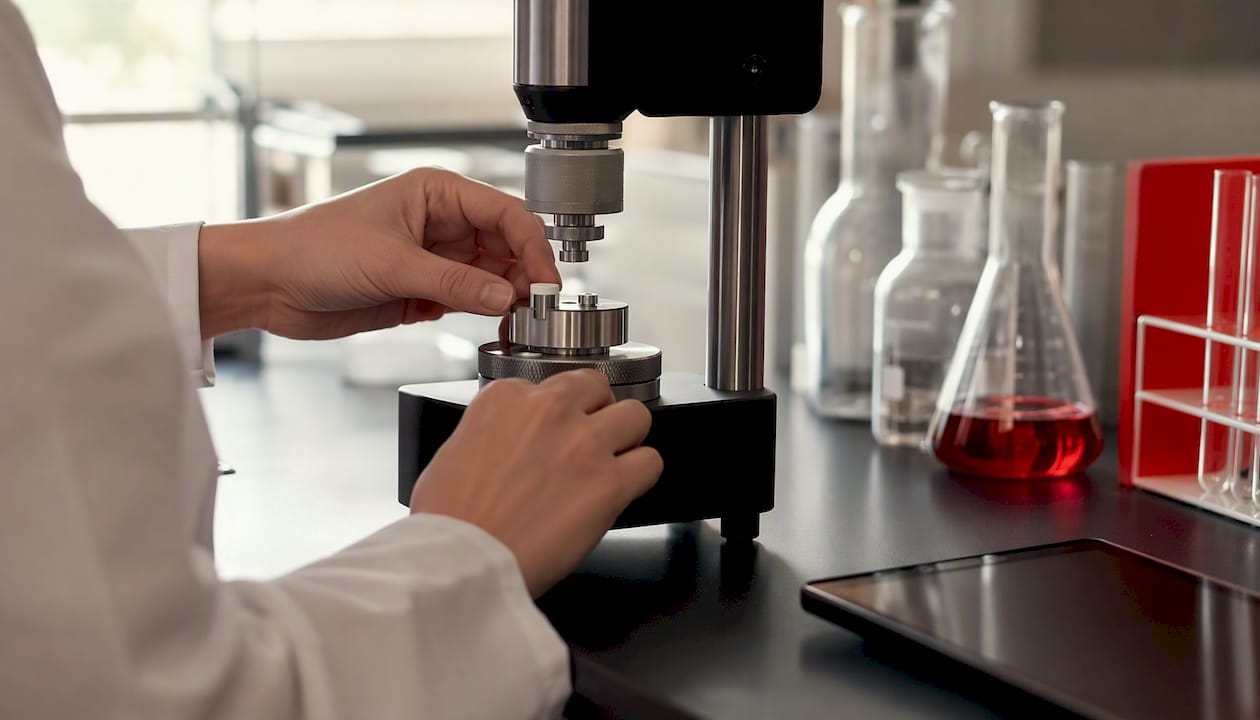
Three physical parameters directly affect how a tablet performs in dissolution apparatus testing: weight uniformity, hardness, and friability.
Weight uniformity determines whether each tablet delivers a consistent mass of active material. USP <905> sets acceptance criteria for weight variation in solid dosage forms; for reference tablets used in dissolution studies, tight weight uniformity is a prerequisite for reproducible dissolution profiles.
Hardness (tablet crushing strength) influences disintegration time and, consequently, dissolution rate. A tablet that is too hard disintegrates slowly; one that is too soft may fragment inconsistently. Hardness is typically measured in kiloponds (kP) or Newtons using a hardness tester such as a Schleuniger or Erweka instrument.
Friability measures a tablet’s resistance to surface abrasion and breakage during handling, expressed as percentage weight loss after a defined number of rotations in a friabilator. For research-grade tablets used in dissolution protocols, request friability data alongside hardness to confirm the tablet survives handling without generating fines that would confound dissolution results.
Why dissolution testing matters in tablet quality control
Dissolution testing is the primary in vitro method for assessing how quickly and completely a tablet releases its active ingredient under controlled conditions. For research-grade alkaloid tablets used in analytical studies, dissolution data serves a different but equally rigorous purpose: confirming that the tablet’s physical formulation delivers the active material into solution at a rate and extent consistent with the study protocol.
A tablet that passes purity testing on the COA but fails to dissolve predictably in your dissolution medium produces unreliable quantitation data. The connection between COA-verified purity and dissolution-protocol readiness is direct: you need both a chemically verified material and a physically characterized tablet to generate defensible analytical results.
Dissolution testing methods and apparatus: USP apparatus I and II
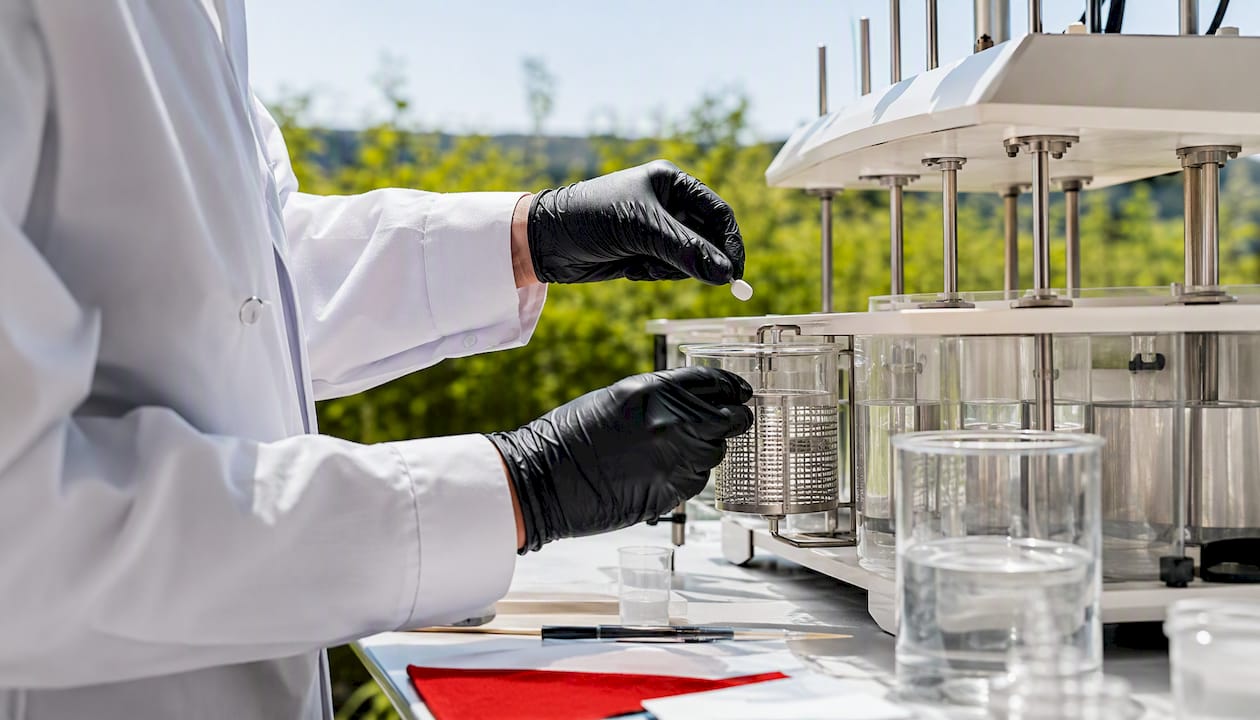
The two most widely used dissolution apparatus configurations in U.S. labs are USP Apparatus I (basket) and USP Apparatus II (paddle), both described in USP <711>.
USP Apparatus I (basket): The tablet is placed inside a wire mesh basket that rotates at a specified speed (commonly 50–100 rpm) within a vessel containing the dissolution medium. The basket configuration suits tablets that tend to float or disintegrate into large fragments.
USP Apparatus II (paddle): A paddle rotates above the vessel floor at a specified speed (commonly 50–75 rpm), with the tablet resting at the bottom. Paddle apparatus is the more common choice for standard immediate-release tablets and is generally preferred for research-grade alkaloid tablets in method development.
Both apparatus types require temperature control at 37.0 ± 0.5°C to simulate physiological conditions. Dissolution medium selection (pH, ionic strength, surfactant concentration) depends on the analyte’s solubility profile and the study’s analytical goals. For 7OH tablets, method development should include a solubility screen across relevant pH values before committing to a final medium.
Standard operating procedures and testing protocols for tablets
A dissolution SOP for research-grade tablets should specify, at minimum: apparatus type and rotation speed, dissolution medium composition and volume, temperature, sampling time points, sample filtration method, and the analytical method used for quantitation (typically LC-MS or HPLC-UV).
Sampling intervals are typically set at multiple time points (for example, 15, 30, 45, and 60 minutes) to generate a dissolution profile rather than a single endpoint measurement. Each sample is filtered, diluted if necessary, and analyzed against a calibration curve prepared from the same lot of reference material used in the dissolution run. Sink conditions (dissolution medium volume at least three to ten times the saturation volume of the analyte) should be confirmed during method development to avoid back-precipitation.
How to interpret dissolution profiles and analyze the data
A dissolution profile plots percent of active ingredient released against time. The shape of that curve tells you whether the tablet is releasing material too quickly, too slowly, or inconsistently across replicates.
Key data analysis steps:
Calculate percent dissolved at each time point using the calibration curve and account for volume replacement if sampling removes medium.
Assess profile shape: A sigmoid curve suggests controlled release; a rapid early rise followed by a plateau is typical for immediate-release formulations.
Apply similarity factor (f2): When comparing two dissolution profiles (for example, different lots of the same tablet), an f2 value ≥50 indicates similarity under FDA and ICH guidance.
Flag outliers: Individual vessels that deviate by more than ±20% from the mean at any time point warrant investigation before the data is accepted.
Variability across replicates often traces back to tablet weight uniformity or inconsistent sample filtration rather than the analytical method itself.
Common challenges and troubleshooting in dissolution testing
The most frequent problems in dissolution testing fall into three categories: physical, analytical, and procedural.
Coning occurs when tablet powder accumulates in a cone at the vessel bottom in Apparatus II, shielding undissolved material from the paddle. Increasing paddle speed or switching to Apparatus I typically resolves this.
Inconsistent filtration is a leading source of replicate variability. Use the same filter type and pore size across all vessels; pre-saturate filters with dissolution medium before sampling to prevent analyte adsorption.
Evaporation from open vessels during long dissolution runs shifts the medium volume and concentrates the sample. Cover vessels with watch glasses or use apparatus with evaporation covers for runs exceeding 60 minutes.
Analyte instability in the dissolution medium can cause apparent low recovery. Run a stability check by spiking a known concentration of reference material into the medium and measuring recovery at each time point before running tablet samples.
Regulatory guidelines and international standards for dissolution testing
USP <711> is the primary U.S. standard for dissolution testing of solid oral dosage forms, covering apparatus specifications, operating parameters, and acceptance criteria. For research-grade tablets used in analytical studies, USP <711> provides the methodological framework even when the material is not a regulated drug product.
Beyond U.S. standards, the European Medicines Agency (EMA) publishes guidance on dissolution testing for immediate-release solid oral dosage forms, and ICH Q6A sets decision trees for dissolution acceptance criteria in the context of drug substance and drug product specifications. ICH Q1A(R2) addresses stability testing and includes dissolution as a key parameter for solid dosage forms under accelerated and long-term conditions.
For U.S. labs, USP <711> and ICH Q6A together provide the most directly applicable framework. EMA guidance is relevant when study data may be submitted to European regulatory authorities or when comparing dissolution methods across international collaborators.
The case for prioritizing raw spectra over price
When procurement teams face time pressure, the temptation is to approve the fastest or lowest-cost supplier and verify documentation later. That sequence creates real risk. A COA without original spectral files cannot be independently verified, and a lot that passes a summary purity table but fails LC-MS retention-time matching in your lab wastes far more time and budget than the cost difference between suppliers.
Raw spectra and lot traceability are the two checks that matter most under time pressure, precisely because they are the hardest to fabricate and the easiest to verify quickly. Price and lead time are secondary considerations once those two criteria are confirmed. Institutional workflows, including EH&S chemical inventory entry and procurement office documentation, are much easier to complete when the supplier’s documentation is complete at the time of order rather than chased down after receiving.
Request a COA packet or institutional quote from 7ohyea
Research labs that need dissolution-ready 7OH reference materials with complete batch documentation can order directly through 7ohyea’s product pages or contact the team for an institutional COA packet before committing to a bulk order.
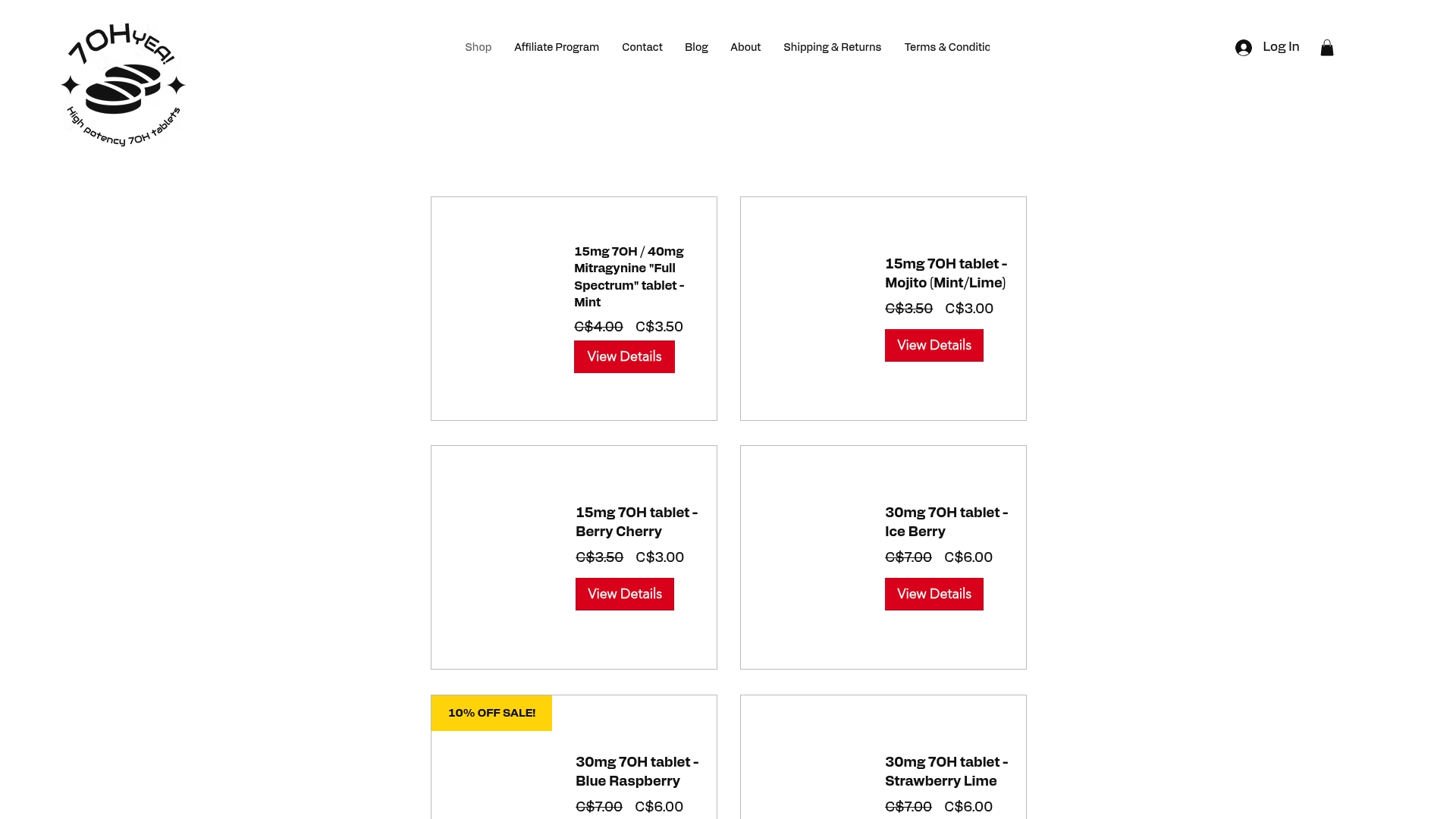
7ohyea supplies 30mg 7OH tablets and 15mg tablet SKUs with batch-specific COAs that include original NMR, MS, and HPLC chromatograms, lot-matched SDS, and Karl Fischer water content data. For institutional purchasing teams, 7ohyea can provide sample COA files in advance, support end-user statement requirements, and advise on customs documentation for Canadian-origin shipments entering U.S. labs. Visit 7ohyea to request a quote, review available dosages, or download a sample COA for your procurement review.
Sources
Retain copies of supplier COAs, SDS, and completed pre-purchase checklists in a lot-specific institutional audit file. These records support both GLP audit readiness and reproducibility documentation for published studies.
This article is general information, not a substitute for advice from a qualified lawyer. Consult a qualified legal professional about your own circumstances before acting on anything here.
FAQ
What COA documents should a 7OH supplier provide?
A complete COA must include original NMR spectra, MS spectra, and HPLC chromatograms at the batch level, along with a lot number, purity by HPLC area normalization, and Karl Fischer water content. Summary-only COAs are not sufficient for analytical use.
Which dissolution apparatus is standard for research-grade alkaloid tablets?
USP Apparatus II (paddle) is the most common starting point for immediate-release tablet dissolution studies, operating at 37.0 ± 0.5°C. USP Apparatus I (basket) is preferred when tablets float or fragment during testing.
Does 7ohyea provide batch-level raw spectral data?
Yes. 7ohyea supplies batch-specific COAs that include original NMR, MS, and HPLC chromatograms for each lot, along with lot-matched SDS and Karl Fischer water content data, supporting full traceability for U.S. lab procurement workflows.
What DEA considerations apply to ordering 7OH materials in the U.S.?
Verify the current scheduling status of 7-hydroxymitragynine under the Controlled Substances Act before ordering. If a DEA Researcher Registration is required for your intended use, obtain it prior to placing the order and document it in your institutional procurement file.
How do you confirm identity of 7OH in a dissolution sample by LC-MS?
Recommended
Comments