
7-Hydroxymitragynine Purity Levels for Analytical Labs
- 7OHyea
- Aug 11
- 9 min read

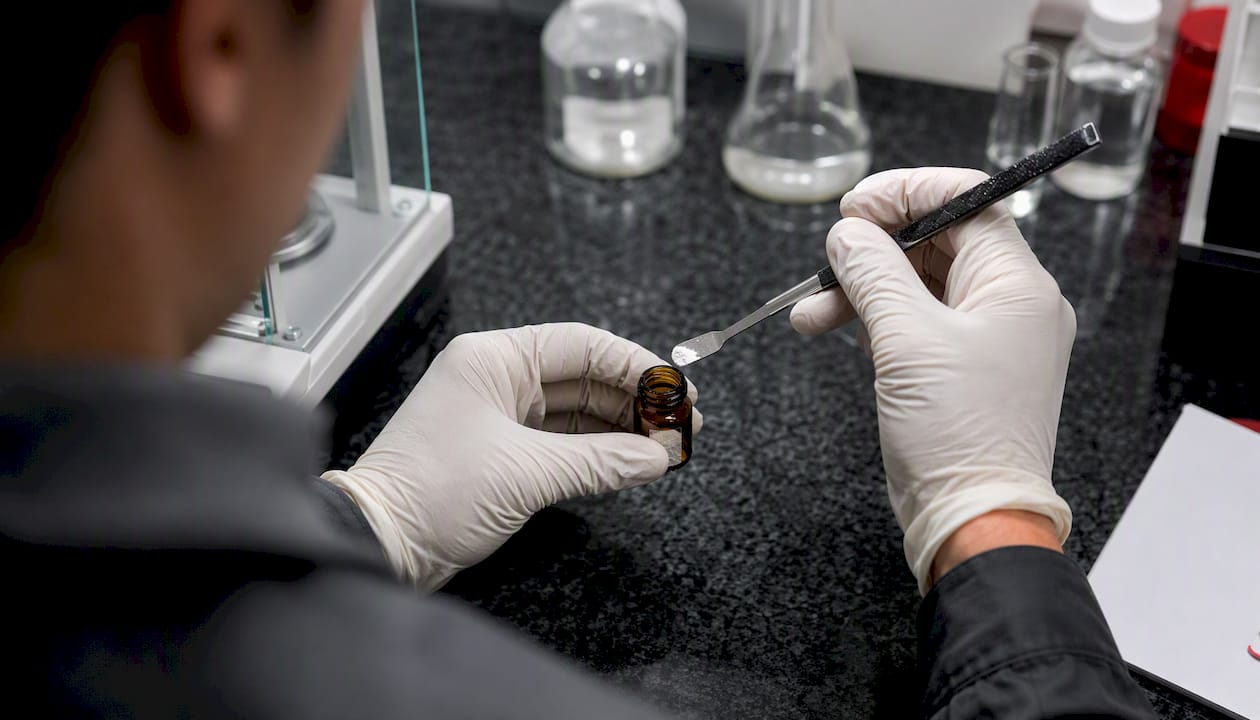
For research-grade 7-hydroxymitragynine reference materials, request a high-purity assay (mass fraction, dry basis) assigned by a validated HPLC or UPLC method, with a lot-specific Certificate of Analysis that states the assigned value, its uncertainty, the analytical method used, and an expiry or retest date.
Quick-reference specifications by use case:
Identity confirmation only: assay meeting identity confirmation requirements accepted; chromatographic identity data required on CoA
Routine quantitative analysis: assay suitable for quantitative analysis, assay-corrected for water content, with stated uncertainty (typically ±0.5–1.0%)
Trace-level or LOQ method validation: a very high assigned purity value, preferably qNMR-characterized or mass-balance primary standard
Every purchase order must require three documents at minimum: a lot-specific CoA, the assigned assay value with the method used to determine it, and an expiry or retest date. A generic specification sheet shared across multiple lots is not acceptable for method validation work.
Key Takeaways
Point | Details |
Minimum assay for quantitation | Request ≥98.0% dry-basis assay with stated uncertainty; use ≥99.0% for LOQ validation. |
CoA must name the method | Reject any CoA that lists an assay value without identifying the analytical method used. |
AOAC LOQ and range | AOAC SMPR 2015.008 sets LOQ ≤0.005% (≤50 ppm) and analytical range 0.01–0.5%. |
Storage and handling | Store at 2–8°C, protected from light; aliquot bulk material into amber vials with desiccant. |
7ohyea supply | 7ohyea provides lot-specific CoAs with 15 mg, 30 mg, and 50 mg tablet formats for North American labs. |
Table of Contents
What “purity” actually means for a 7-OH reference material
The term purity covers several distinct metrics, and conflating them on a purchase order is one of the most common procurement errors in alkaloid reference standard work. Understanding each metric helps you write specifications that suppliers can actually fulfill.
Assay (mass fraction) is the primary purity metric. It expresses the mass of 7-hydroxymitragynine as a percentage of the total dry mass of the material. Suppliers report it as a percentage or, for certified solutions, as a concentration in µg/mL. Assay is not the same as potency: potency implies a biological response, while assay is a purely chemical measurement. For reference standard sourcing and certification, best practice assigns assay values using a mass-balance approach or quantitative NMR (qNMR), which is considered the gold-standard absolute method because it determines content relative to a certified internal standard rather than an external calibration curve.
Supporting metrics you must also check on every CoA:
Individual and total impurities (reported as area percent or mass fraction by HPLC)
Water content by Karl Fischer titration (reported as % w/w; subtract from dry-basis assay)
Residual solvents by GC headspace (GC-HS), with limits per ICH Q3C or equivalent
Inorganic residues (ash or specific metals where relevant)
Uncertainty on the assigned assay value, expressed as ±% at a stated confidence level
Pro Tip: Prefer CoAs that name the specific HPLC or UPLC method reference (or state “qNMR”) used to assign the assay value. A CoA that lists only a result with no method is not traceable and should be rejected for method validation work. For additional chemical background on the compound itself, see this complete research guide to 7-hydroxymitragynine.
Which purity grade fits your laboratory use case
Grade labels such as “research grade” or “HPLC grade” are shorthand. As guidance on lab-grade chemical purchasing makes clear, a written specification listing assay, moisture, metals, and functional impurities is required for critical materials — grade labels alone do not replace it.
Use Case | Minimum Assay | Preferred Form | Key CoA Requirement |
Identity confirmation | suitable assay purity | Tablet or powder | Chromatogram + spectral ID |
Routine quantitation | appropriate assay purity for quantitation | Tablet, powder, or solution | Assay + uncertainty + method |
LOQ / trace validation | high-purity, characterized by advanced methods | Certified solution ampoule | Full characterization + traceability |
For trace-level or LOQ validation, a certified solution at a defined concentration — such as the format used by Cerilliant’s H-099 product, supplied at 100 µg/mL in 0.1 N ammonia in methanol — removes the weighing uncertainty that comes with small masses of powder. Ampoule solutions are also preferable when your lab lacks a microbalance calibrated to sub-milligram precision.
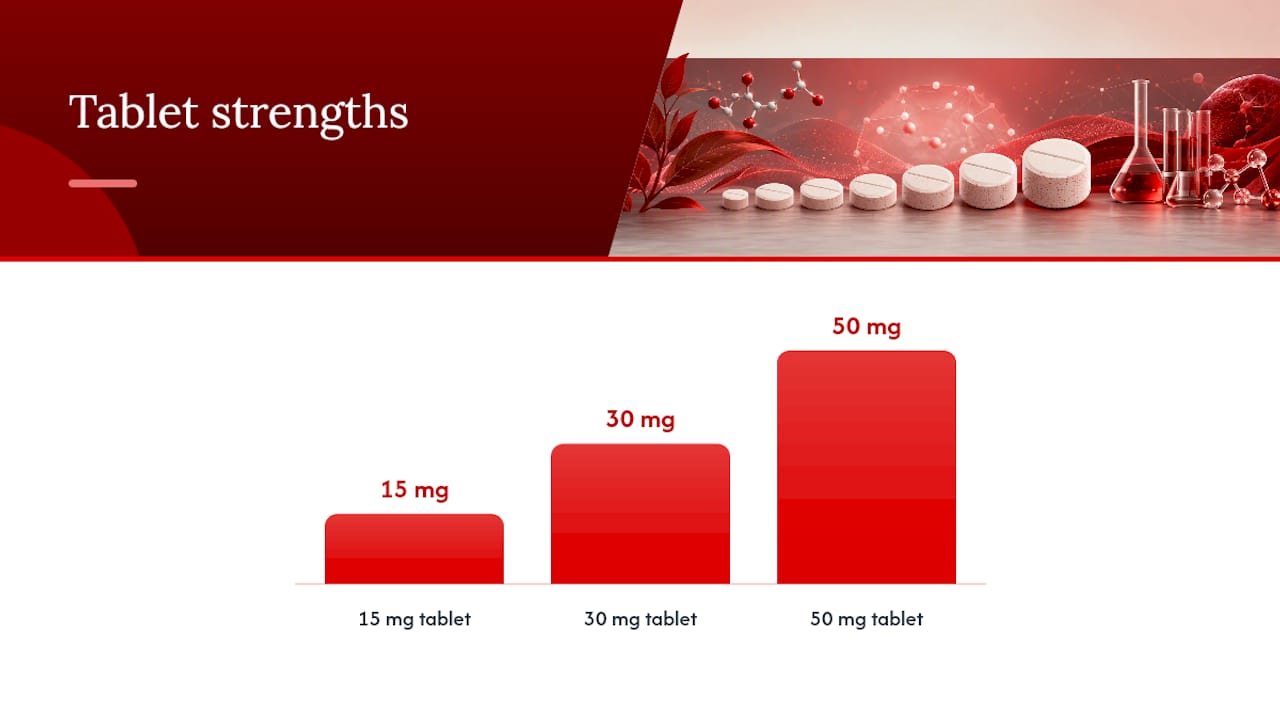
7ohyea offers 15 mg, 30 mg, and 50 mg tablet formats alongside bulk powders, giving labs flexibility to match unit size to protocol requirements without over-ordering.
What your CoA must include — a field-by-field checklist
A compliant CoA for a 7-hydroxymitragynine reference material contains specific fields. Missing even one of the following is grounds to request a corrected document before accepting the lot.
CoA Field | What to Verify |
Chemical name and CAS number | Must match 7-hydroxymitragynine |
Lot / batch number | Unique to this shipment; must match label |
Assigned assay value + uncertainty | Stated as % ± % at confidence level (e.g., ±0.5–1.0%) |
Analytical method for assay | Named method (e.g., HPLC-UV, UPLC-DAD, qNMR) |
Chromatogram or spectral identity data | Retention time, resolution, and baseline visible |
Water content (Karl Fischer) | Reported as % w/w |
Residual solvents (GC-HS) | Listed with limits |
Individual impurities | Quantified with reporting limits |
Traceability statement | Reference to primary standard or ISO Guide 34 |
Storage conditions | Temperature, light, humidity |
Expiry or retest date | Lot-specific, not a generic shelf-life claim |
Authorized signatory | Named quality official with signature |
Traceability statements should reference ISO Guide 34 or equivalent accreditation for the producing laboratory. A supplier that cannot provide a named primary standard against which the lot was characterized is not providing a traceable reference material. Watch for red flags: a CoA with no lot number, a chromatogram shared across multiple products, or an assay value with no stated uncertainty.
Method performance parameters your reference material must support
AOAC SMPR 2015.008 sets the performance floor for 7-hydroxymitragynine analysis: a single-laboratory analytical range of 0.01–0.5% and an LOQ of ≤0.005% (≤50 ppm). Your reference material must be pure enough and well-characterized enough to support calibration across that full range without introducing significant uncertainty from the standard itself.
Validation requirement: AOAC guidance specifies that suitable methods include blank check samples and check standards at the lowest and midrange points of the analytical range, with repeatability and reproducibility reported as %RSD.
Validation checklist for qualifying a new lot:
Confirm the assay value and uncertainty from the CoA before preparing calibration solutions.
Prepare a blank and check standards at the low end (≈0.01%) and midrange (≈0.25%) of the analytical range.
Run six replicate injections at each concentration level; calculate %RSD for repeatability.
Compare results against the previous lot’s calibration to confirm no significant shift.
Document system suitability: peak resolution, tailing factor, and retention time consistency.
Set acceptance criteria in your SOP before running the test, not after reviewing results.
For collaborative or multi-lab studies, reproducibility %RSD must also be reported. For a deeper look at laboratory detection methods relevant to 7-OH analysis, 7ohyea’s technical resources cover quantitative approaches in detail.
Handling, storage, and stability for 7-OH tablets and powders
Proper handling from receipt through use preserves assay integrity and satisfies audit expectations for sample custody.
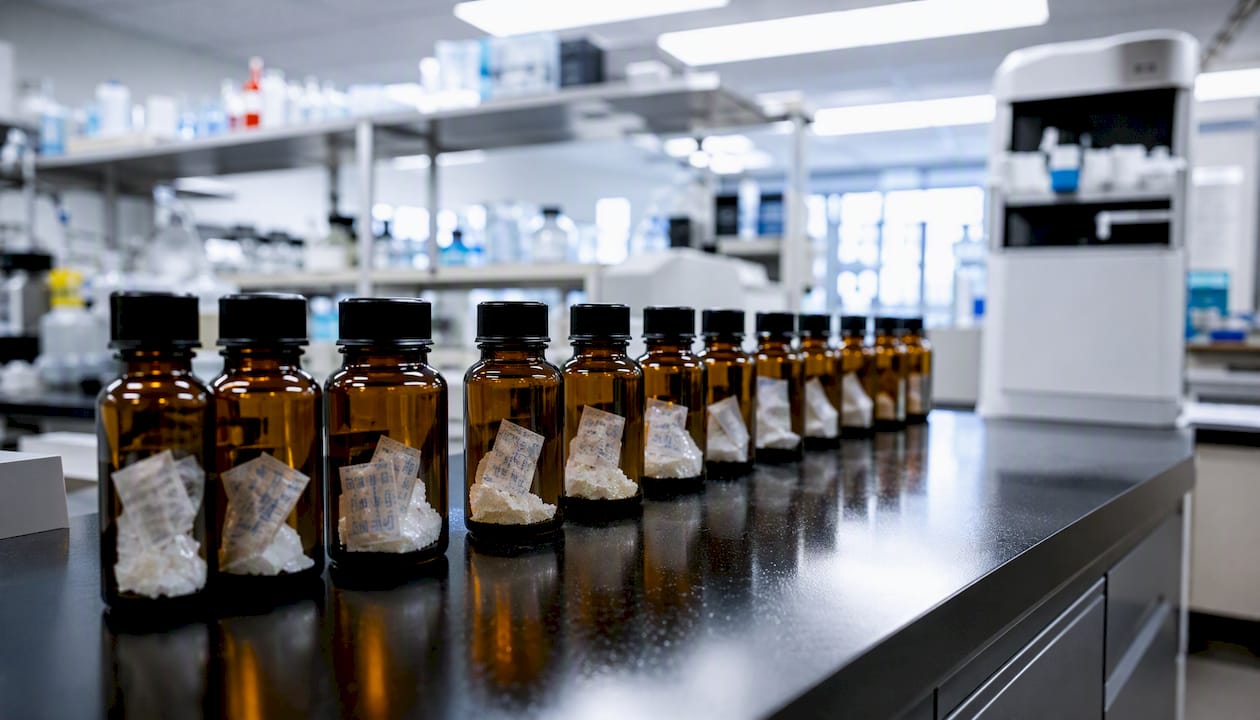
Recommended storage conditions: Keep powders and tablets at 2–8°C, protected from light and humidity. Certified solutions in ampoules typically require freezer storage (≤ −20°C) and should never be exposed to repeated freeze-thaw cycles.
On receipt, follow these steps:
Inspect the label: confirm lot number, expiry date, and storage conditions match the CoA.
Check visual appearance: powders should be free of clumping, discoloration, or moisture ingress.
Transfer immediately to controlled storage; log the receipt date and storage location.
Do not open the primary container until needed; aliquot into smaller sealed vials if the protocol requires repeated access.
Record any deviation from stated shipping conditions (e.g., temperature excursion during transit).
If storage conditions were compromised, run an accelerated degradation check: compare a fresh HPLC chromatogram of the affected lot against the CoA chromatogram. A shift in peak area exceeding your acceptance criteria triggers requalification or rejection.
Pro Tip: When splitting bulk powder into working aliquots, document the mass of each aliquot and the total mass balance. Store aliquots in amber glass vials with desiccant to minimize moisture ingress and protect against photodegradation. See bulk purchasing guidance for lot-size and packaging options.
Procurement checklist for ordering research-grade 7-OH reference materials
Use this checklist on every purchase order. Reference standard qualification guidance confirms that verifying traceability, performing identity and purity testing, and documenting requalification frequency are all required steps — not optional.
Physical form: specify tablet (15 mg, 30 mg, or 50 mg), bulk powder (state mass in mg), or certified solution (state concentration in µg/mL and solvent).
Assay acceptance limit: state the minimum assay value (e.g., ≥98.0% dry basis) and require the assigned value with uncertainty on the CoA.
Required CoA fields: list every field from the checklist in the section above; do not accept a generic spec sheet.
Traceability statement: require a named primary standard reference or ISO Guide 34 accreditation claim.
Packaging: specify amber glass, inert atmosphere seal, and unit size consistent with your protocol’s consumption rate.
Shelf life: require a minimum remaining shelf life of 12 months from delivery date.
Lot-specific chromatogram: require a digital copy of the identity chromatogram with the shipment, not a generic library spectrum.
Requalification trigger: state in your SOP that any lot showing a >2% shift in assay versus the CoA value on receipt testing triggers rejection or supplier escalation.
Restricted-use language: confirm the supplier’s documentation states “for research use only, not for human consumption” on the label and CoA.
Documentation retention: retain CoAs, receipt records, and in-house qualification data for the duration required by your lab’s quality system (typically ≥5 years or per regulatory requirement).
Sample procurement wording: *"Supplier shall provide a lot-specific Certificate of Analysis for each shipment of 7-hydroxymitragynine reference material, including assigned assay value with uncertainty, analytical method, water content, residual solvents, individual impurities, traceability statement, and an authorized signatory.
Why 7ohyea is a reliable source for research-grade 7-OH reference materials
7ohyea (7OH Canada) sources and manufactures its 7-hydroxymitragynine materials in British Columbia, Canada, and ships directly to North American laboratories. The product line maps directly to the use cases described throughout this guide:
15 mg, 30 mg, and 50 mg tablet formats for protocols requiring discrete, pre-weighed unit doses
Bulk powders for labs preparing their own calibration solutions at defined concentrations
Lot-specific CoAs provided with each order, covering assay value, concentration, and product identity
Research-use-only labeling on all products, consistent with laboratory compliance requirements
Canadian sourcing with domestic North American shipping, reducing transit time and temperature-excursion risk
When placing an order, request the lot-specific CoA and digital chromatogram in your order notes. If your SOP requires a traceability statement referencing ISO Guide 34 or an equivalent accreditation, include that language explicitly in your purchase order so the documentation team can provide the correct paperwork. For cost and unit-size context before ordering, the 7-hydroxymitragynine cost guide covers pricing structures for different lot sizes.
An editorial perspective on purity standards in practice
The gap between what a CoA states and what a lab actually verifies on receipt is where most reference standard problems originate. Labs routinely accept a supplier’s assay value without running a single confirmatory check, then trace method failures back to the standard months later. The specifications in this guide are not bureaucratic overhead — they are the minimum documentation needed to defend your calibration in an audit or a collaborative study.
The move toward qNMR-assigned values for novel alkaloid standards like 7-hydroxymitragynine reflects a broader shift in analytical chemistry: primary characterization methods that do not depend on a pre-existing calibration curve are simply more defensible. If your current supplier cannot provide a qNMR-assigned value or a mass-balance primary characterization, that is worth raising in your next supplier review.
How to order research-grade 7-OH from 7ohyea
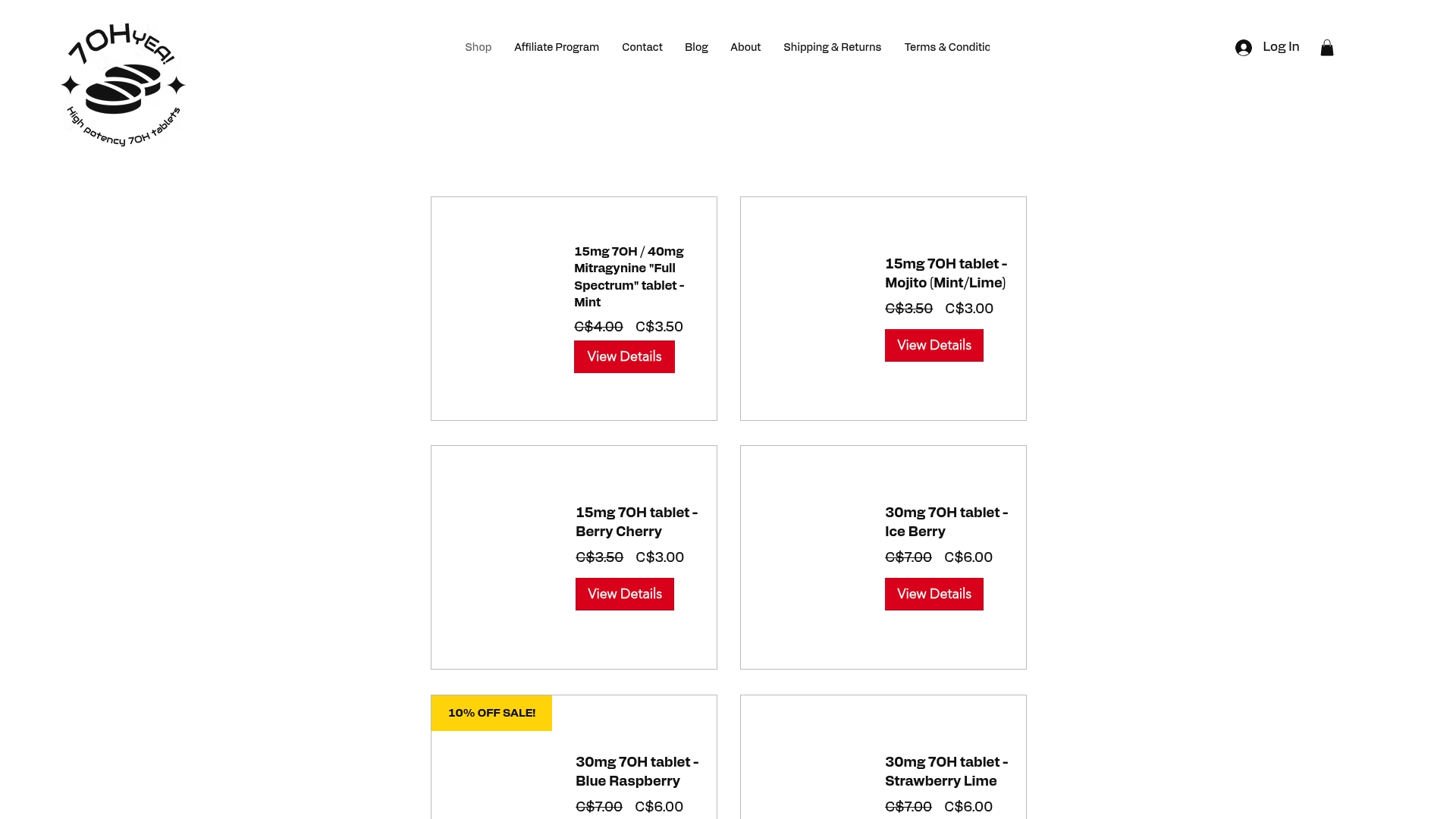
7ohyea offers research-grade 7-hydroxymitragynine tablets and powders with lot-specific CoAs, shipped from Canada to North American laboratories. Products are available in 15 mg, 30 mg, and 50 mg tablet formats, as well as bulk powder, all labeled for research use only and not for human consumption.
To place an order, visit 7ohyea and include the following in your order notes or procurement email:
*"Please supply a lot-specific CoA including assigned assay value with uncertainty, analytical method, water content (Karl Fischer), residual solvents (GC-HS), individual impurities, traceability statement, and authorized signatory. Please include a digital copy of the identity chromatogram.
Sources
FAQ
What assay level should I request for a 7-OH reference standard?
What is the LOQ requirement for 7-hydroxymitragynine analysis per AOAC?
Which CoA fields are non-negotiable for method validation?
At minimum: assigned assay value with uncertainty, the analytical method used, water content (Karl Fischer), residual solvents (GC-HS), a lot-specific chromatogram, a traceability statement, and an expiry or retest date.
Does 7ohyea provide lot-specific CoAs with shipments?
Yes. 7ohyea supplies lot-specific CoAs with each order of its research-grade 7-hydroxymitragynine tablets and powders, covering assay value, product identity, and concentration.
When should I choose a certified solution over a powder standard?
Choose a certified solution ampoule for LOQ or trace-level validation, or when your lab lacks a microbalance calibrated to sub-milligram precision, since it eliminates weighing uncertainty from the calibration process.
Recommended
Comments